What we’re chatting about
All the latest trends and best practices in conversational marketing.
The revenue leak everyone knows about but can't fix
A customer gets a great haircut. Loves it. Tips well. Says "see you next time!" Then... silence. Eight weeks pass, then twelve weeks, then six months…They book somewhere else or just let their hair grow out.
Or a family throws their daughter's birthday party at your entertainment center. The kids had a blast. Parents were thrilled. "We'll definitely be back!" Then next year, they book at the trampoline park down the street, not because they didn't love you, but because you weren't top of mind.
This is the rebooking gap. A salon owner told us: "Our customers need touch-ups in 4-6 weeks, but rebooking is always a struggle." Another said: "Your stylists aren't salespeople. We've struggled with retail sales for 42 years."
Here's the opportunity: research by Bain & Company shows that a 5% increase in customer retention rates can boost profits by 25% to 95%. Acquiring a new customer costs 5 to 25 times more than retaining an existing one (Harvard Business Review). Yet most booking businesses spend all their energy on new customer acquisition while existing customers quietly slip away.
What if every customer who loved their first experience automatically became a regular? That's what Smart Rebooking makes possible.
What Smart Rebooking actually means
Smart Rebooking is intelligent, automated outreach that contacts customers at exactly the right time based on service type, provider availability, and customer preferences, before they forget about you or book elsewhere.
The Tildei Smart Rebooking Agent doesn’t send generic "we miss you" emails. Instead, it generates a personalized, timely, conversational outreach that feels like a helpful reminder from someone who knows you.
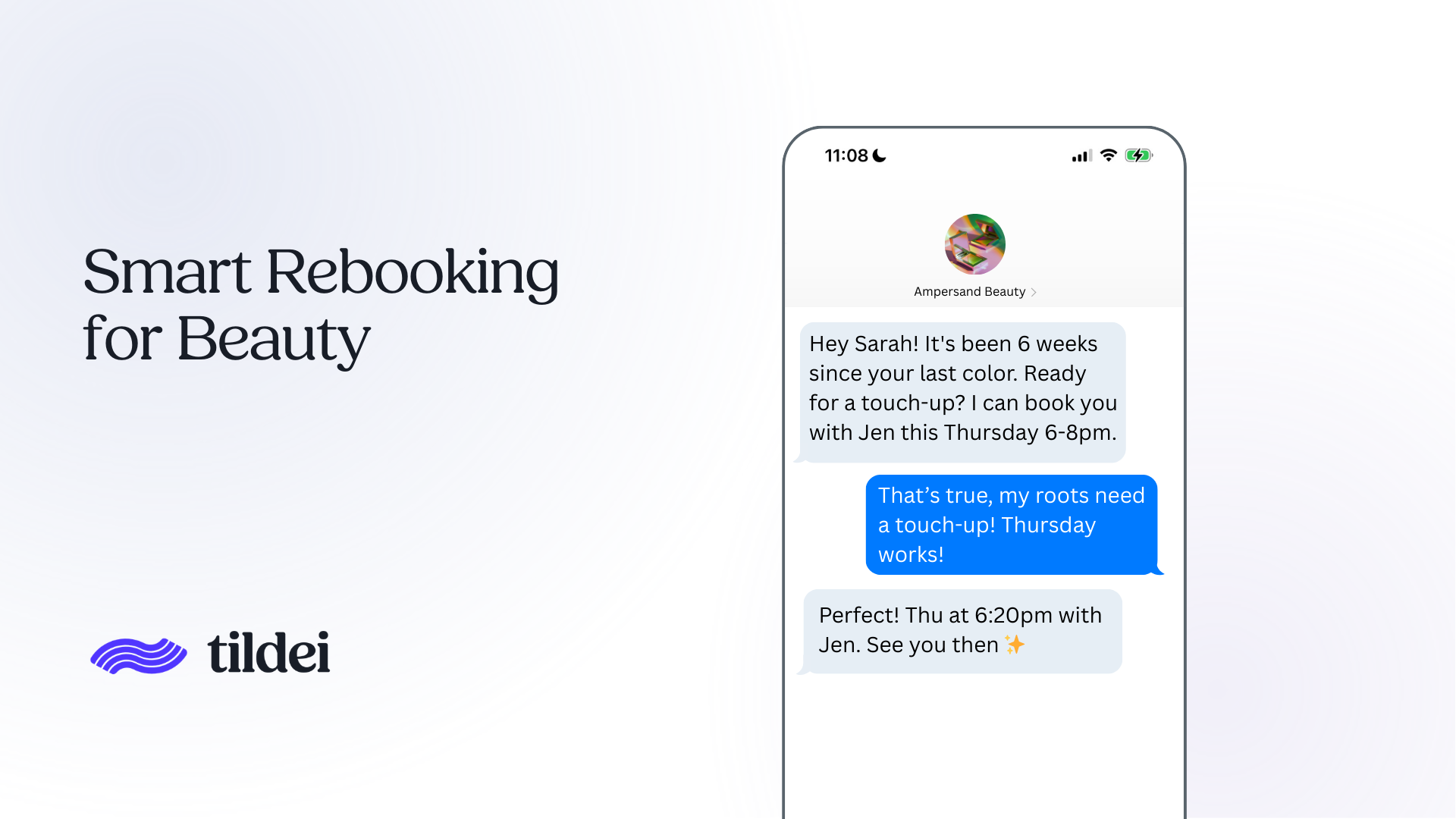
With two messages, this salon got a confirmed rebooking. The customer didn't have to remember, and the stylist didn't have to make an awkward ask. It just happened, because the system knows when Sarah should naturally return.
Where it fits: Post-Visit → Book
Smart Rebooking lives in the Post-Visit booking lifecycle stage (triggering outreach at the right time) and completes the Book stage (confirming the rebooking). A few booking businesses have sophisticated systems for initial bookings, rescheduling, cancellation saves, and pre-visit reminders. But they have nothing systematic for post-visit rebooking, where the biggest lifetime value opportunity sits.
The intelligence behind Smart Rebooking
Service-Based Timing
The AI knows when customers should naturally return. For example:
- Beauty: Short cuts (4 weeks), color (4-6 weeks), long cuts (8-12 weeks)
- FEC: Birthday parties (11 months), seasonal visits (3-4 months)
- Travel: Seasonal experiences (6-12 months), related activities (2-4 weeks)
The AI is not limited to generic 90-day windows, it can actually provide service-specific timing.
Smart Context
Smart Rebooking prioritizes preferred providers, factors in seasonality and life events ("Holiday parties coming up!"), and learns customer behavior patterns: preferred days, times, and communication channels.
Why humans can use the help of AI
In general, stylists are artists, not salespeople. Party coordinators are managing day-of logistics, not tracking 300 families' birthday calendars. Front desk teams are overwhelmed. Generic marketing emails get 2-5% open rates because they're not timely or personal.
The missed opportunity compounds daily. Every customer who doesn't rebook represents lost lifetime value, not because they chose a competitor, but because you weren't in the conversation at the right moment.
Three trigger types that build lifetime value
Time-Based Rebooking: Reaches out when customers are naturally due (6 weeks post-color, 11 months post-party). This builds habitual loyalty.
Occasion-Based Rebooking: Triggered by holidays, seasons, events. Becomes top-of-mind during natural booking moments.
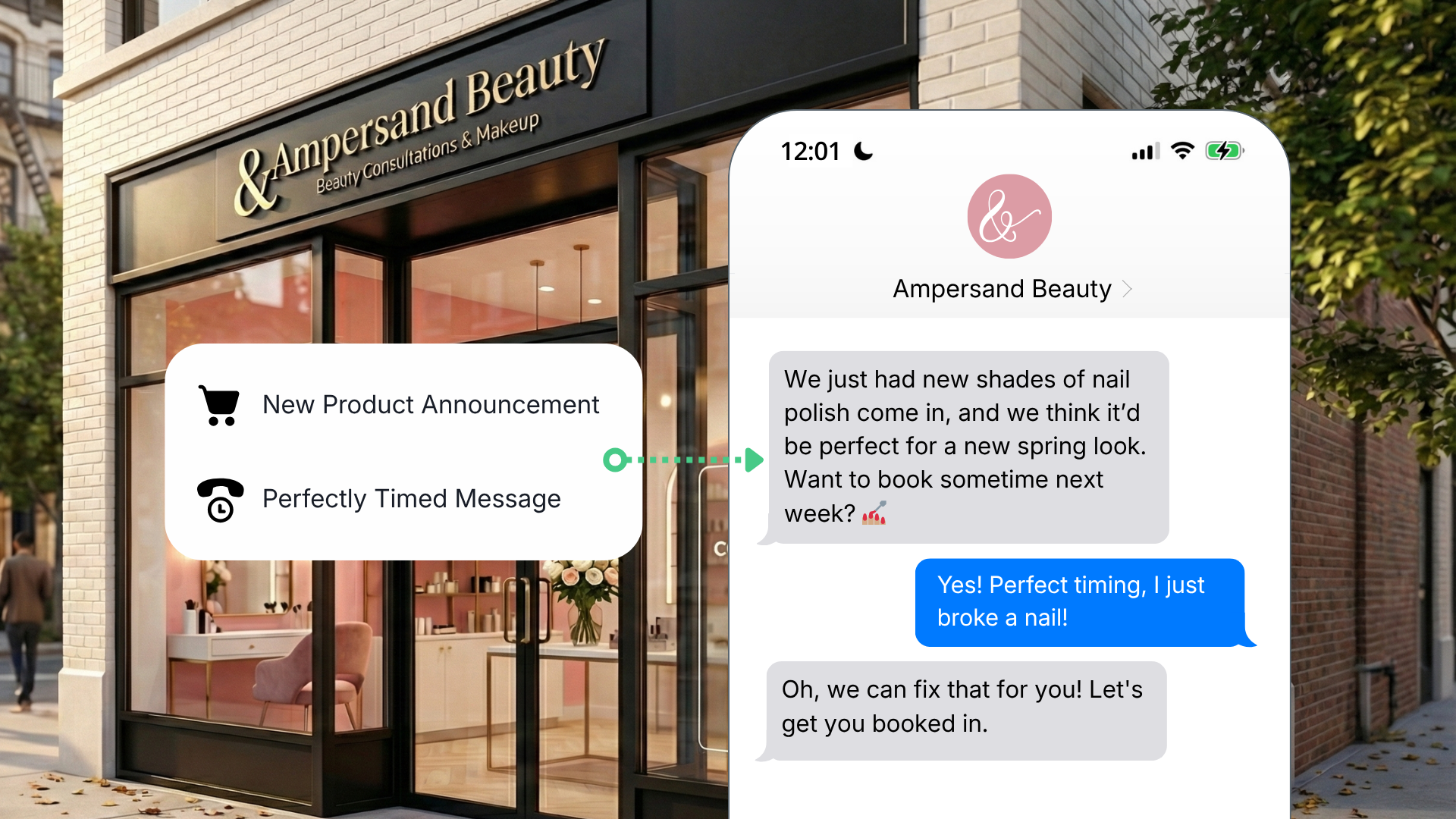
Product/Service Launch: Introduces new offerings to existing customers. Example:
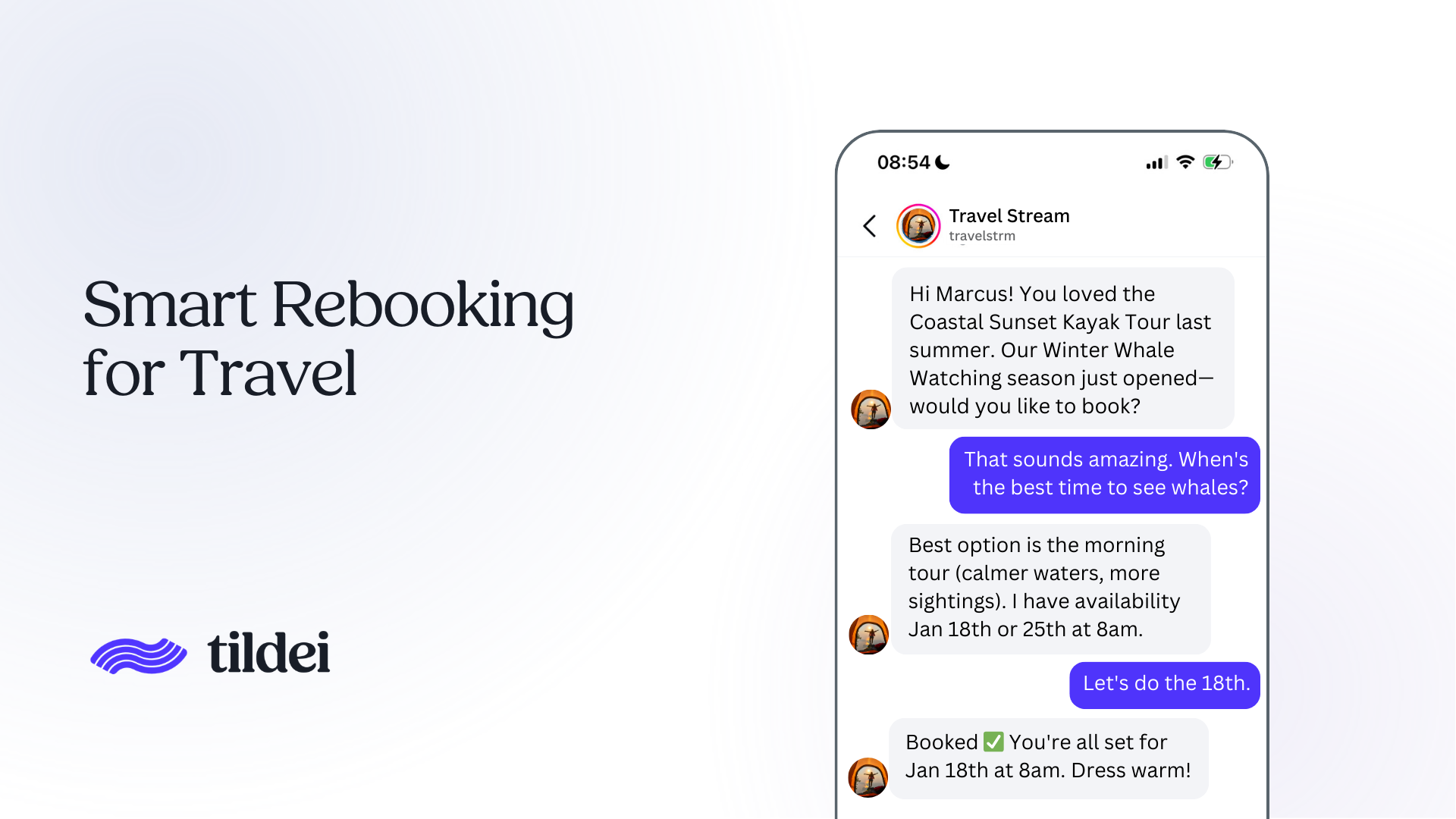
This is how you increase lifetime value. A few examples: turning kayakers into whale watchers, color clients into keratin customers, party families into camp enrollments.
What success looks like
Measure lifetime value created:
- Rebook rate: % of customers who book again within their service window
- Customer lifetime value: Average revenue per customer over 12/24 months
- Repeat customer rate: % who become regulars (3+ visits)
- Calendar fill rate: % of slots filled, especially off-peak
A 5% improvement in retention can increase profits by 25–95% (Bain & Company), because retention compounds: customers who rebook once are significantly more likely to rebook again.
Why this requires purpose-built infrastructure
Generic marketing automation doesn't know service-specific timing, doesn't access real-time availability, can't have two-way booking conversations, and doesn't understand relationship context.
Smart Rebooking requires:
- Customer history (last service, preferred provider, booking patterns)
- Business context (rebooking windows, staff schedules, seasonal offerings)
- Conversational AI (handles questions, checks availability, books on the spot)
Tildei integrates with your booking platform (Zenoti, Boulevard, Acuity, FareHarbor) and works across SMS, WhatsApp, and Instagram DMs, Messenger and more. The "concierge style" makes outreach feel like it's from "Maria at Hairluxe" or "the team at Summit Point": warm, personal, helpful, not salesy.
Your 30-Day Plan
Week 1: Choose one segment (color clients, last year's parties, summer tour guests). Define the rebooking window. Measure baseline rebook rate.
Week 2: Launch automated outreach. Track response and booking rates.
Week 3: Add a second trigger type (occasion-based or product launch).
Week 4: Measure lift, calculate lifetime value impact, expand to other segments.
What are some possible outcomes? A potential 20-40% increase in rebook rate, 15-25% improvement in calendar fill rate, 2-3× ROI in the first 90 days.
Turn one-time customers into lifetime relationships
Your existing customers already trust you. They already love your service. The only thing standing between you and higher lifetime value is the rebooking conversation, and that conversation doesn't have to be awkward, manual, or inconsistent.
Smart Rebooking turns every first-time customer into a potential lifetime relationship.
Ready to see how Smart Rebooking works for your business? Book a demo with Tildei today.
Tildei is an intelligent business partner for marketing and brand leaders who want to increase bookings and provide guests with smoother, faster experiences. We handle complete booking workflows autonomously across every channel and stage of the booking lifecycle—from first inquiry to confirmed appointment to lifetime retention.
Your existing customers already trust you. Here's how to turn one-time appointments into lifetime relationships, automatically.
.jpg)
The booking moment where everything falls apart
A customer is ready to book, but they have one question. "Can I bring my 8-year-old?" "Which service is right for my skin type?" "What's included in this package?"
Forms work fine when customers have no questions and are ready to commit immediately, but booking decisions aren't like buying a t-shirt. Customers arrive with constraints, such as date, time, group size, and uncertainty: which service is right? What are the policies? Is this suitable for my situation?
The moment that uncertainty hits, you're at risk of losing them. They either abandon, submit something incomplete that requires follow-up, or fire off a separate email that kicks off days of back-and-forth. A design services company takes 48-72 hours to respond because submissions need clarification. A salon chain sees a significant drop-off at the service selection stage. A furniture design company where the booking process is "a pain."
Time to confirm: Hours to days | Drop-off risk: HIGH | Team effort: High
Why this matters more than ever
Your customer doesn’t need a better form, they need (and expect!) instant resolution: the ability to ask questions and get answers without breaking the booking flow. Meta reports over 600 million daily conversations between people and businesses across its platforms. Meta's click-to-message ads revenue in the US grew more than 50% year-over-year in Q4 2025, with WhatsApp paid messaging crossing a $2B annual run rate globally.
So why are we still forcing booking conversations into forms when customers prefer to message?
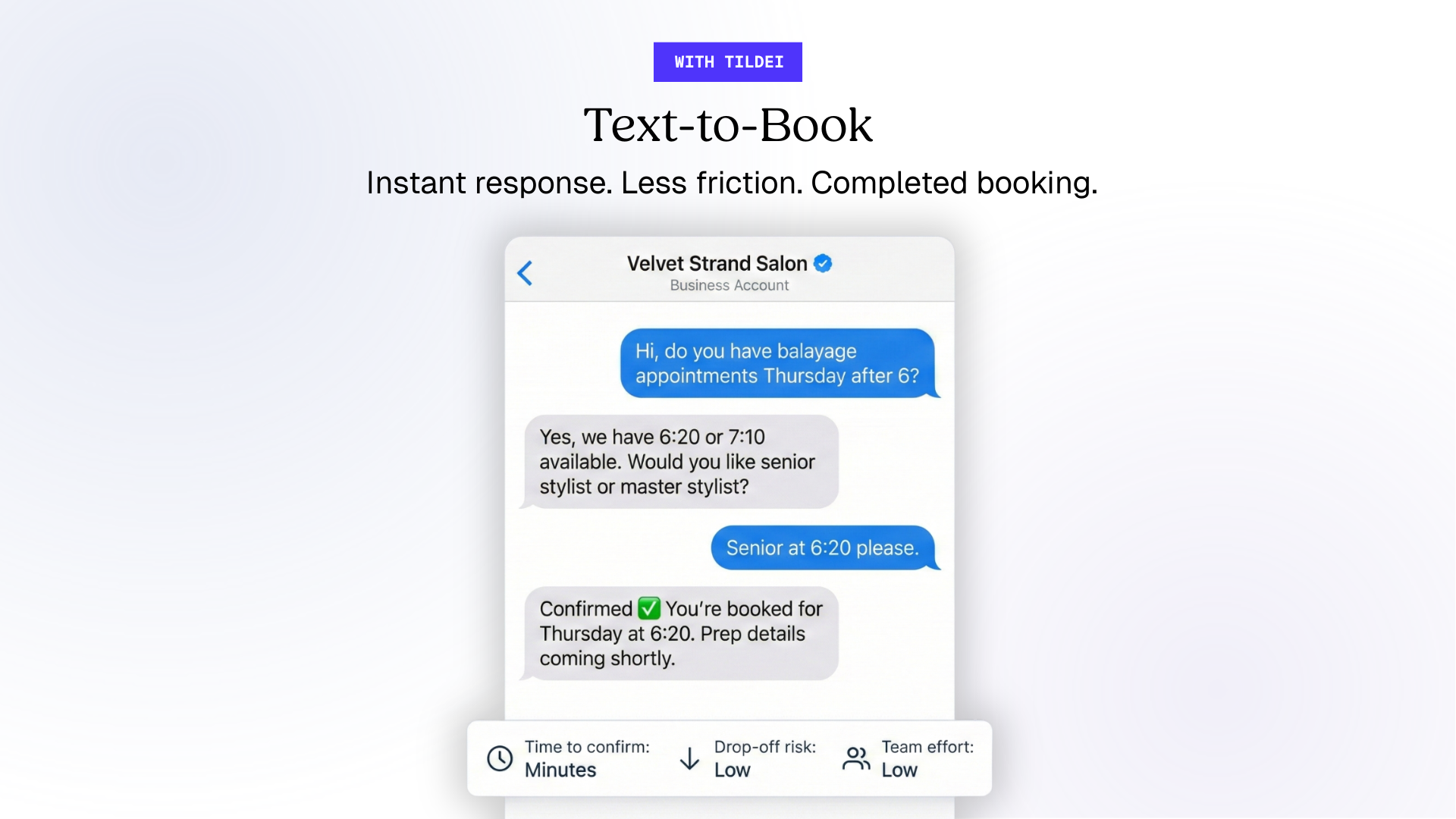
What Text-to-Book actually means
You need an intelligent business partner that handles complete booking workflows autonomously: one that knows your services, availability, and policies, and can have the full conversation from "Do you have slots Thursday?" to "Booked ✅" without a human typing every response. Instead, your team will finally have the time to focus on complex inquiries and high-value tasks.
That's Text-to-Book. It's not "collect a phone number for later", it's finishing the booking in the conversation.
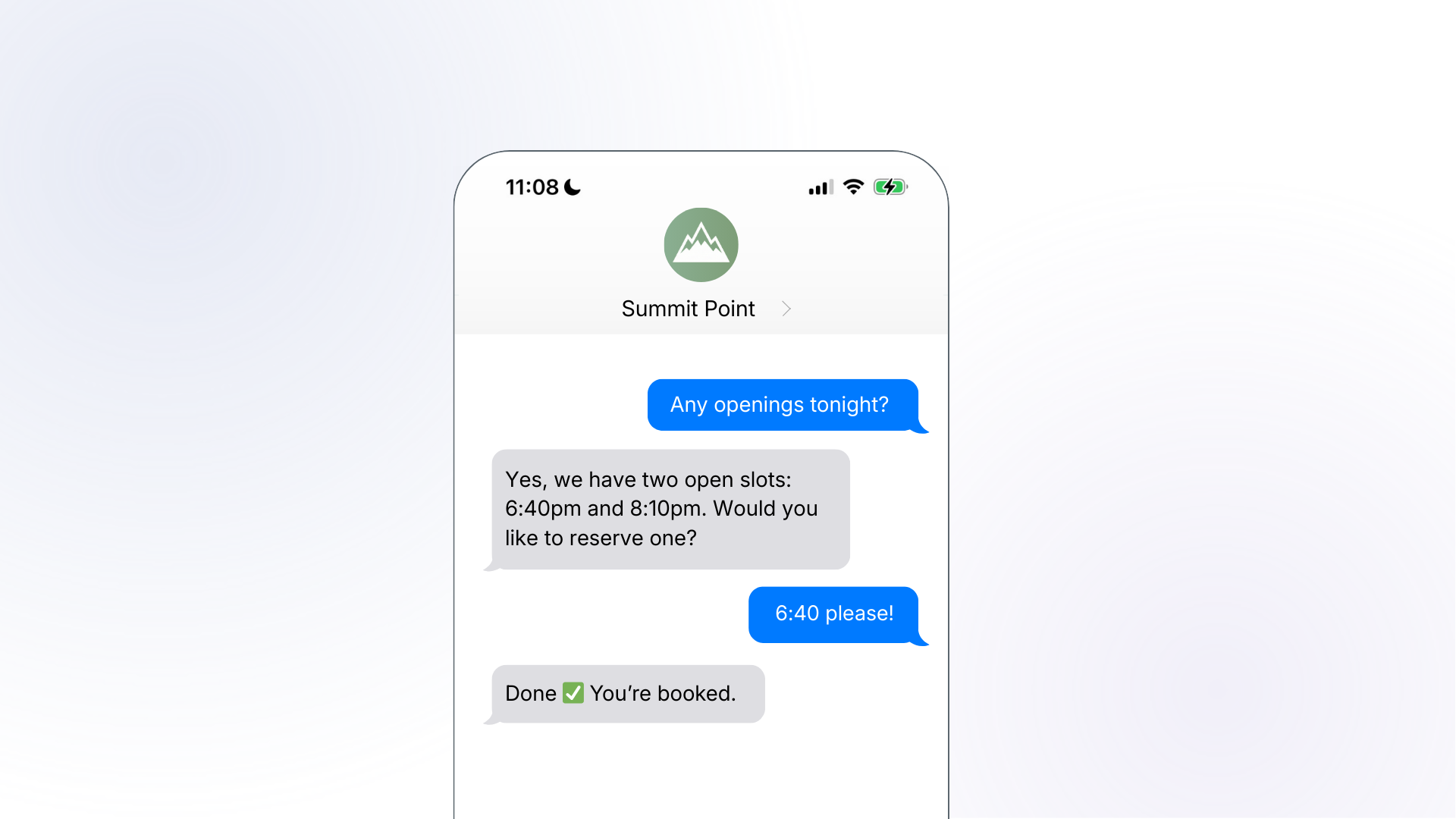
Four messages. Confirmed booking. Notice the time: 11:47 PM. Your team isn't working. But the booking happened because the AI understands your availability engine, capacity, and booking policies.
Time to confirm: Seconds to minutes | Drop-off risk: LOW | Team effort: Zero
Four entry points you can deploy this month
Entry Point #1: Skip the Form, We'll Text You to Book
This is the game-changer, especially on mobile. Give customers a choice: "Skip the form, we'll text you to book."
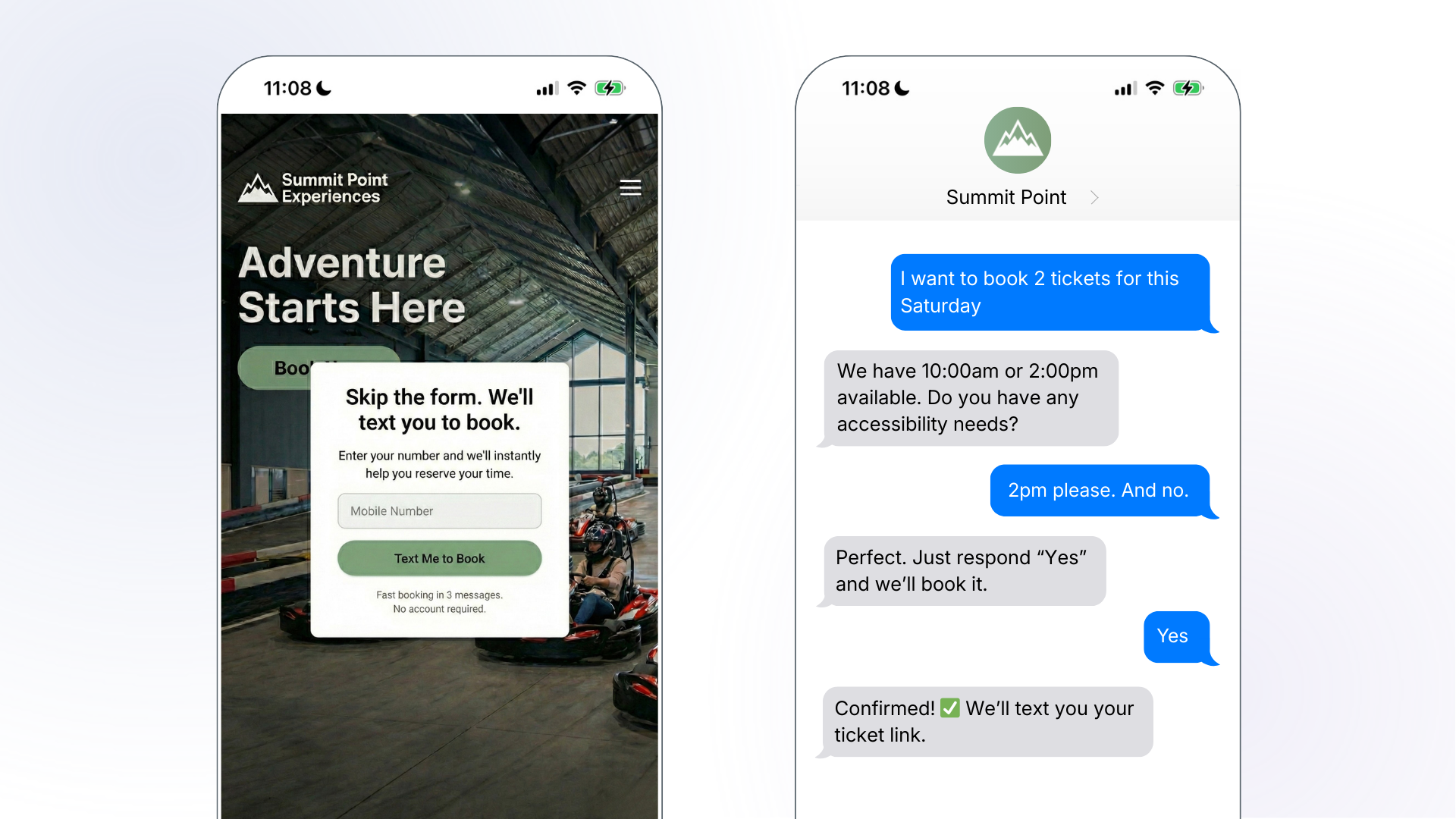
When someone lands on your service page with a question: "What's the difference between these packages?" or "Can I bring my kids?", a form can't help them. With Text-to-Book, the conversation starts the moment they enter their number.
Entry Point #2: Exit-Intent Save
Exit-intent Text-to-Book catches abandoning customers: "Want us to text you available times?" Research shows 65% of digital users find app downloads frustrating, and 40% abandon purchases when pushed to install apps. Every handoff is an exit ramp.
Entry Point #3: Social DMs, Where Intent Already Lives
Run click-to-message ads or "DM 'BOOK'" prompts where the DM flow confirms the booking end-to-end. Meta's Q4 2025 earnings showed click-to-message ads revenue growth accelerated, with the US up more than 50% year-over-year.
Entry Point #4: Proactive Rebooking
A salon owner told us, "Our customers need touch-ups in 4-6 weeks, but rebooking is always a struggle." Automated Text-to-Book outreach fills off-peak inventory with customers who already trust you.
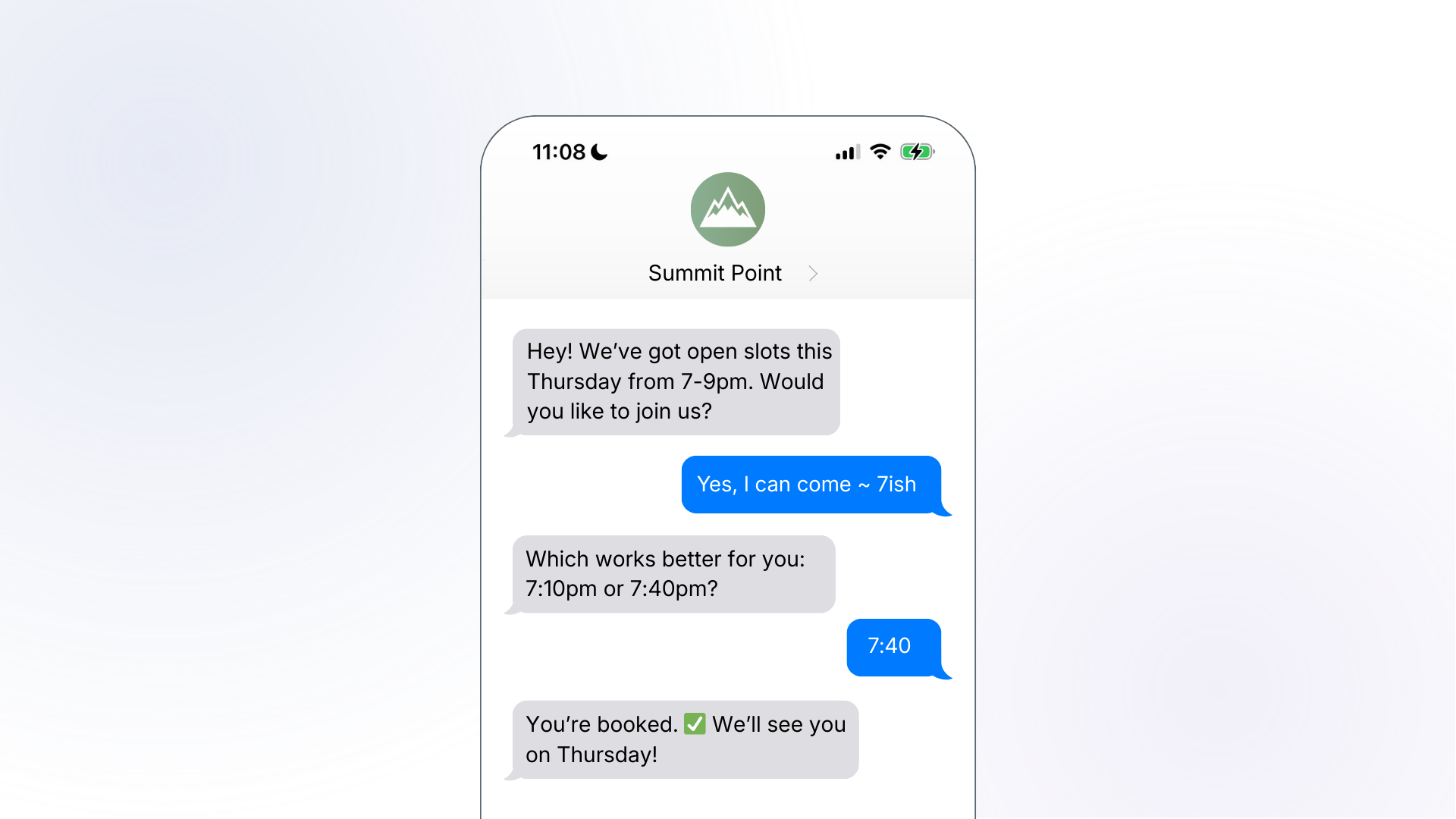
Why most "Conversational AI" can't do this
The AI isn't just responding to questions, it’s also checking availability, understanding service differences, booking appointments, updating calendars, and sending confirmations.
Most chatbots can't do this. The moment someone wants to book, it's "let me connect you with our team." That's not automation, that's another handoff.
The Booking-First Foundation
Text-to-Book works because the AI knows:
- Experiences: What you offer, duration, rules, which services work for which situations
- Schedules: Real-time availability across locations and staff
- Employees/Capacity: Who can deliver what, when they're working
- Guests: Preferences and visit history
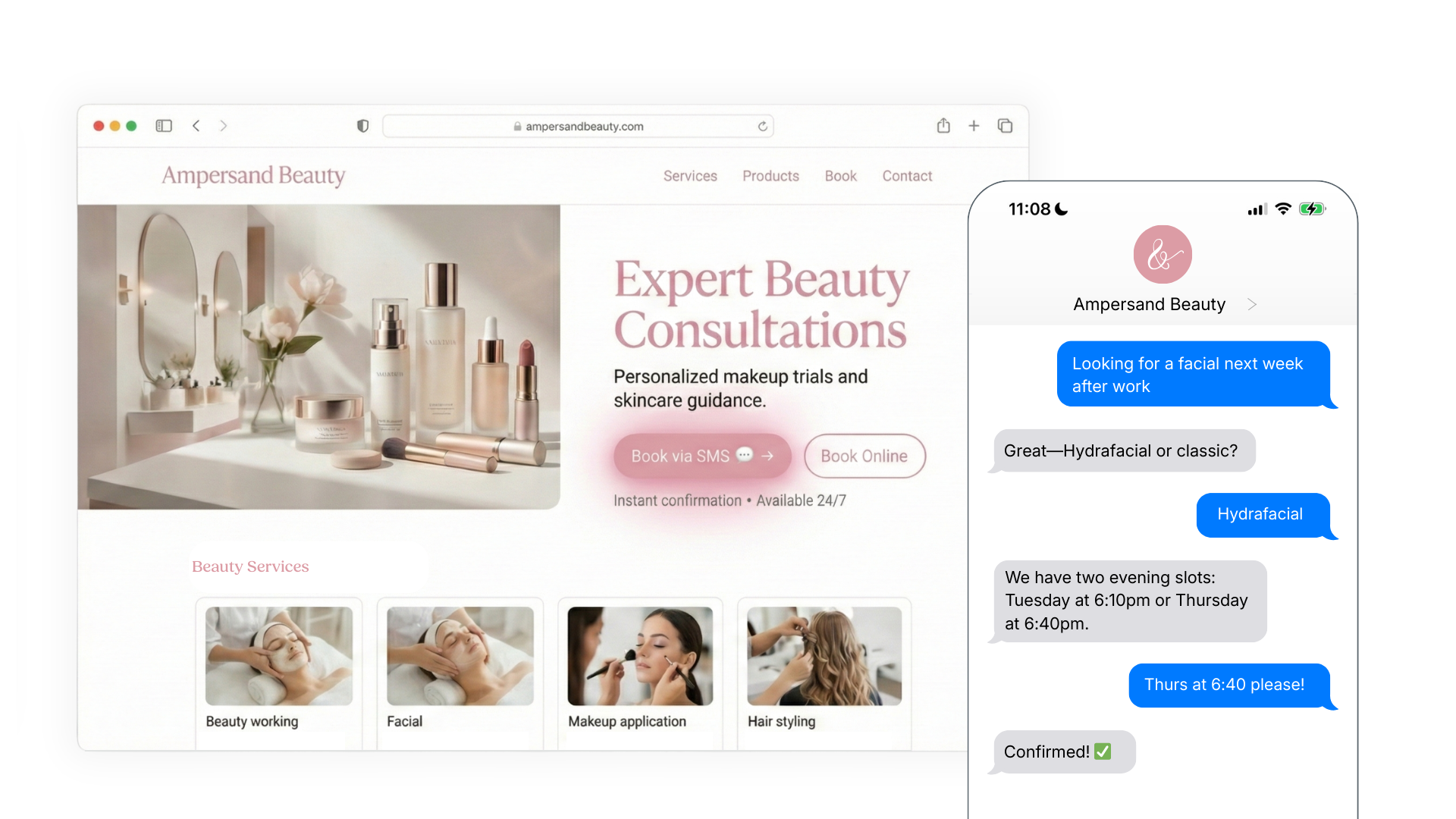
This is why it can handle situations like this one:
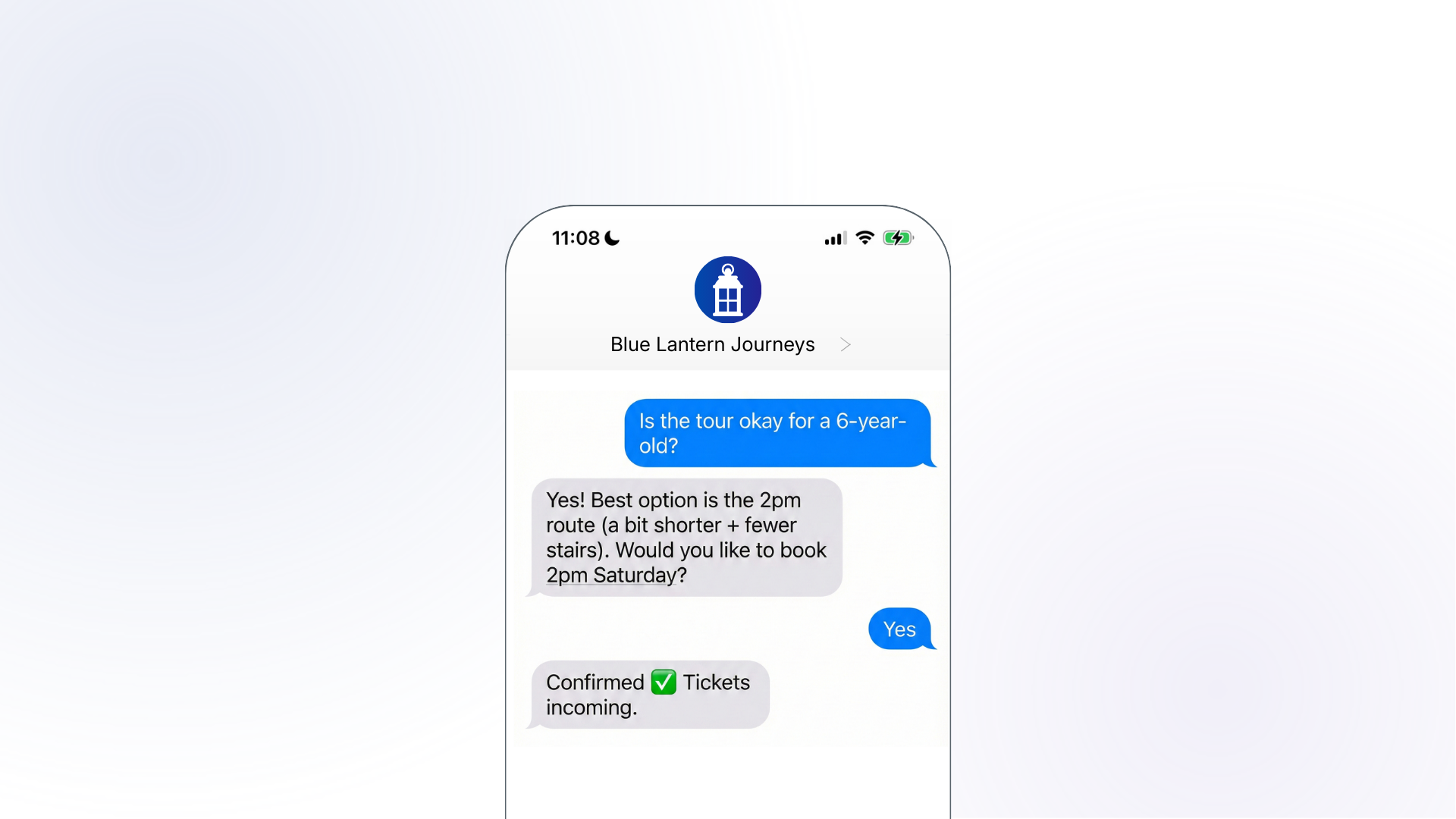
One med spa described their industry as "intricate: a lot of treatment options, products. People have tons of questions." Generic chatbots crumble under that complexity, but purpose-built booking AI like Tildei thrives in it.
Beyond booking: the complete lifecycle
Every interaction is an opportunity to protect or grow revenue. Text-to-Book autonomously handles:
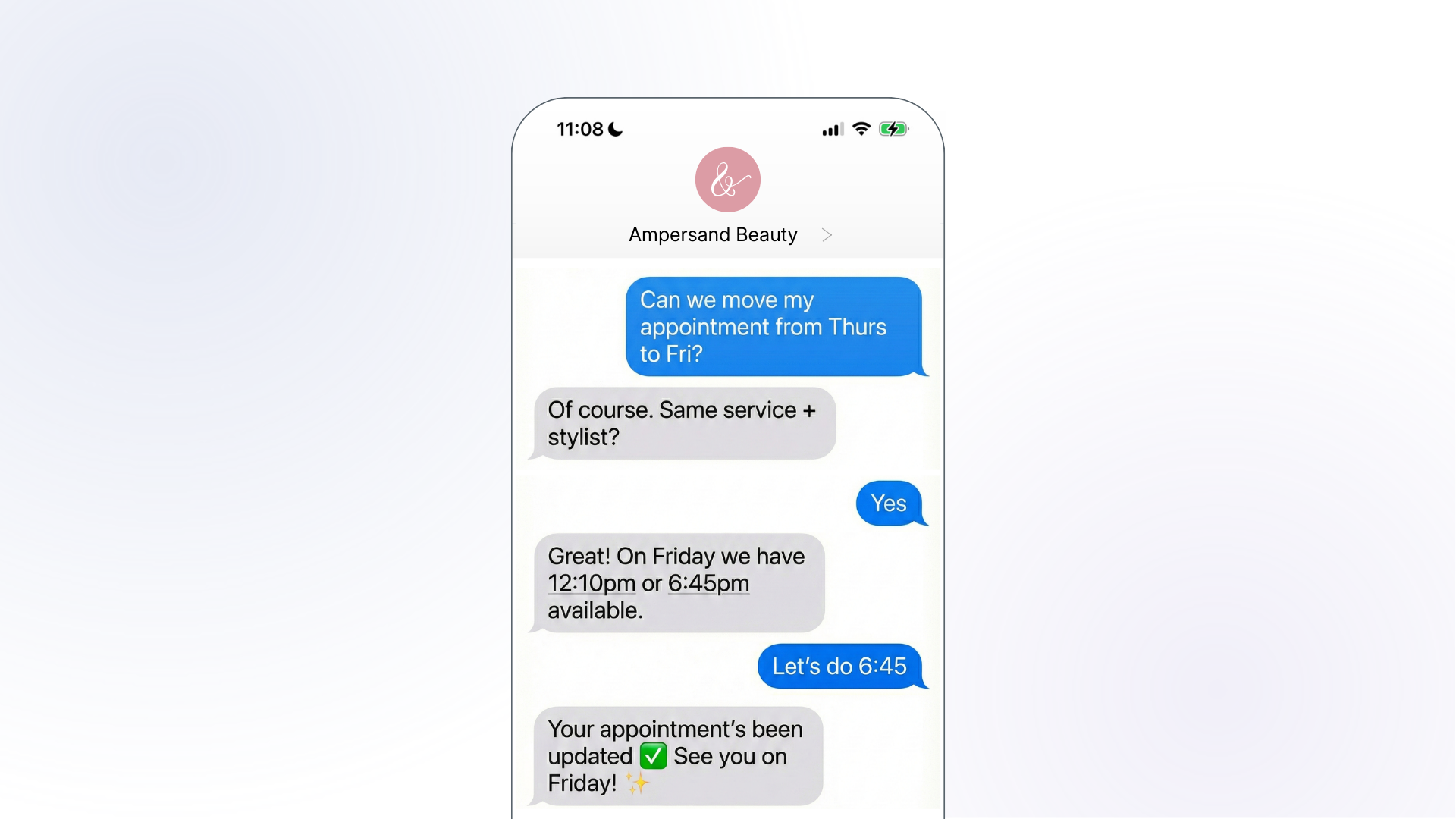
Rescheduling (60 seconds vs. 15 minutes of back-and-forth)
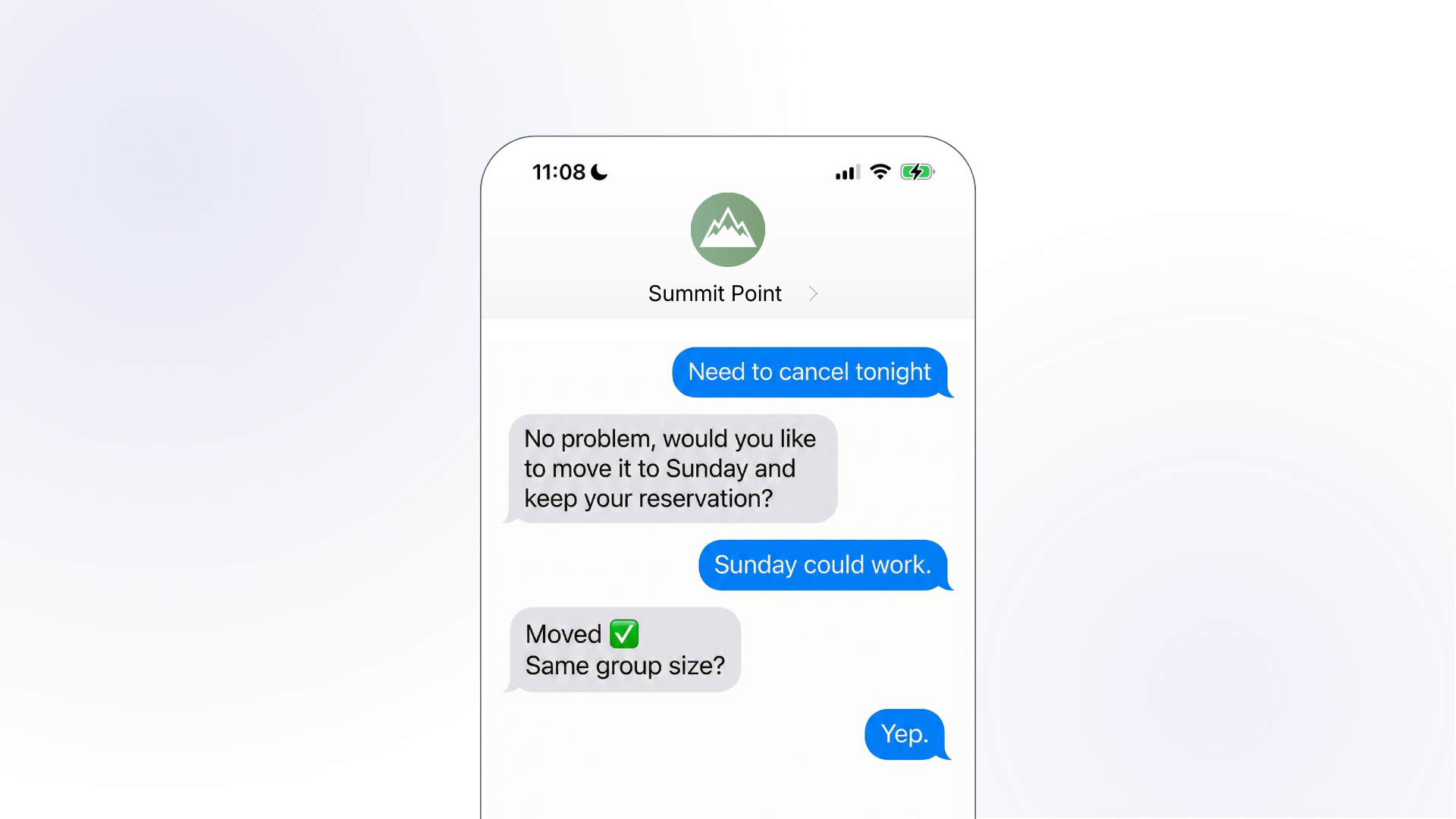
Cancellation-Save (retain bookings at risk)
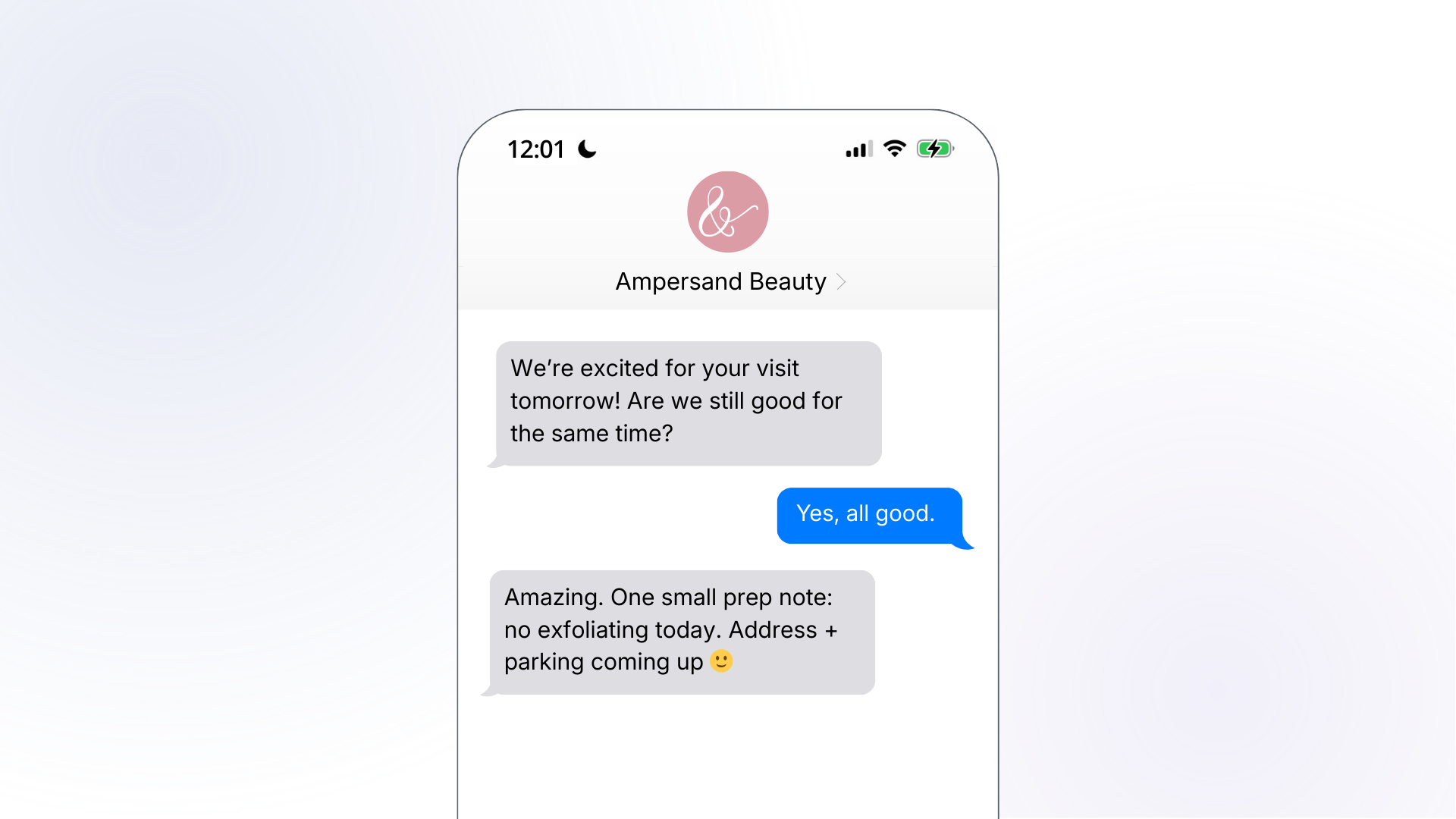
Pre-Visit Communication (reducing no-shows without adding team hours)
Post-Visit (product recommendations, rebooking prompts, review requests)
A salon owner: "Your stylists aren't salespeople." His team has struggled with retail sales for many years. An AI agent doesn't feel uncomfortable following up with product recommendations or rebooking prompts.
The complete chain: Inquiry → Booked → Changes → Reminders → Rebook/Winback. Every link either works autonomously or creates work for your team.
Measure business outcomes, not chatbot metrics
Owners ask "how many appointments did we book today?", not "how is my AI performing?"
What matters:
- Bookings Created
- Chat-to-book conversion rate
- Time to confirm
- Cancellation save rate
- Reschedule success rate
- No-show rate
You as a marketer can structure agents like operational roles and measure by outcomes, not messages sent. You can really measure whether it did the job.
Why Tildei is built differently
Generic AI can chat but can't complete workflows. Tildei is purpose-built to autonomously own the customer lifecycle layer, turning any message into a completed booking while seamlessly integrating with your existing booking platform (Zenoti, Acuity, Boulevard) and marketing tools.
Omnichannel: Web, SMS, WhatsApp, Instagram DMs, Facebook Messenger: one platform, every channel.
We check real availability, understand complex booking rules, know which staff member is right for which service, and remember guest preferences. While other solutions offer operational platforms for day-to-day execution, they aren't equipped with the AI backbone to understand and convert customers through complex, multi-turn conversations.
Your 30-Day Onboarding
Pick one entry point where you're losing the most bookings:
Week 1: Define success as incremental confirmed bookings.
Week 2: Get your booking-first foundation accurate. Let it run.
Week 3: Add one lifecycle workflow, rescheduling or reminders.
Week 4: Measure conversion, time-to-confirm, cost per booking.
Convert intent faster
The booking businesses winning today aren't the ones with the most traffic: they're the ones converting intent into confirmed revenue the fastest.
Stop asking customers to wait. Give them a path to "Booked ✅" that matches how they already communicate.
Ready to see how Text-to-Book works for your business? Book a demo today!
Tildei is an intelligent business partner for marketing and brand leaders who want to increase bookings and provide guests with smoother, faster experiences. We handle complete booking workflows autonomously across every channel and stage of the booking lifecycle.
Customers don't want to "fill a form": they want an answer and a slot. Here's how to design messaging flows that finish the booking.
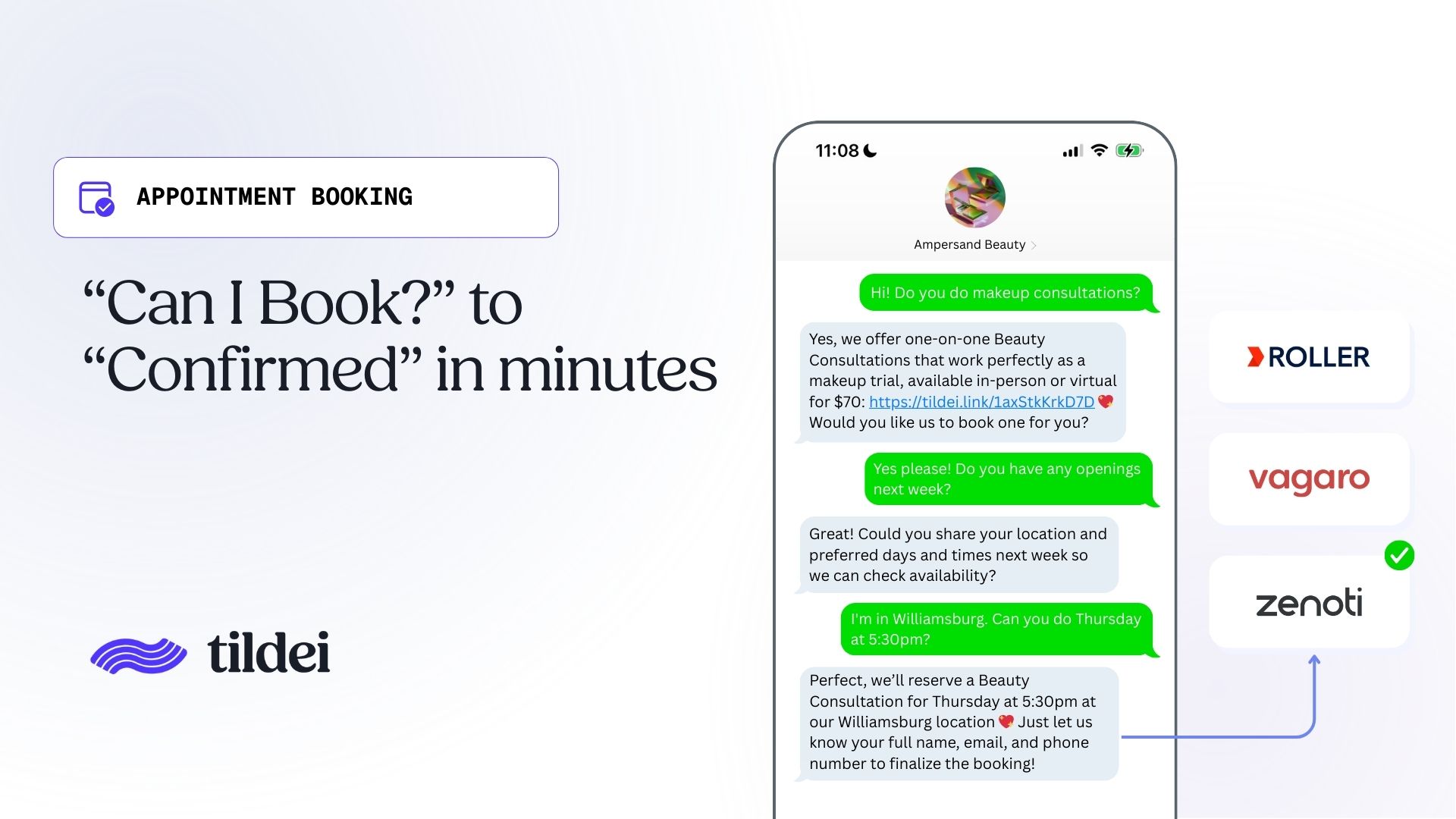
Turn DMs, chats, and website conversations into confirmed appointments. Automate the appointment lifecycle: scheduling, confirmations, reminders, updates, and follow-ups.
The best kind of “fast” feels like great service
When someone asks “Can I book?”, they’re not looking for a process: they’re looking for confidence and a quick yes. Imagine a customer wants to book a facial for next week, or a couple asks for a 20-minute travel consultation, or a homeowner inquires about a design studio appointment for a kitchen layout. If the answer is immediate and the appointment gets confirmed in the same conversation, it doesn’t feel like automation at all. It feels like a brand that’s on it and delivering great service at lightning speed. That’s what AI appointment scheduling should achieve. Not a generic “Here’s a link, go book yourself,” but an agent that smoothly guides the conversation to a confirmed time slot, and updates everything behind the scenes without missing a beat.
AI appointment scheduling isn’t “just a booking link”
Traditional booking links are helpful right up until the customer has nuance in their request. At that point, a one-size-fits-all link falls short:
- Beauty: “Is this facial okay for sensitive skin? Also, do you have a female therapist available?”
- Travel: “We can only do evenings, also, we need visa guidance for our trip.”
- Design studio: “We want to bring measurements. Do you have a 90-minute slot available for a consultation?”
The moment scheduling isn’t a simple click, a static link leads to back-and-forth emails or messages. And back-and-forth often leads to drop-off and lost bookings. An agentic AI scheduling approach keeps the customer in one seamless flow. It can clarify what’s needed, propose valid options, confirm the appointment, and then automatically update your systems. All in one conversation.
The appointment lifecycle (what most teams actually struggle with)
Appointments aren’t a single point in time: they’re a lifecycle that involves multiple steps and handoffs. Consider all five stages:
- Inquiry: The customer asks to book (via DM, chat, SMS, WhatsApp, email, etc.).
- Qualification: Determine what they need: which service, which location or staff, how long, any special constraints or preferences.
- Scheduling: Offer a small set of valid time slots based on real availability and your rules (e.g. appropriate staff, service durations, prep time).
- Pre-visit: Send confirmation details, prep instructions, and reminders. Make rescheduling or canceling easy if needed.
- Post-visit: Follow up with next steps or thank-yous, update the CRM with what happened, and attribute the appointment to the right campaign or source.
Most scheduling tools only optimize step 3 (the booking itself). The real value, however, comes from handling steps 1–5 seamlessly, without making your team the glue that holds the process together.
What the AI Appointment Scheduling Agent does (in 60 seconds)
A Tildei AI Appointment Scheduling Agent can handle the entire booking journey in about a minute. Here’s what it does:
- Detects booking intent: It recognizes phrases like “Can I book a facial?”, “Can we schedule a travel consult?”, or “Can I book a design appointment?” and immediately kicks into scheduling mode.
.jpg)
- Asks the right questions (only when needed): If details are missing, the agent asks just enough to clarify. For example, in beauty it might ask which treatment or therapist preference; in travel it could ask about trip type or dates; in a design inquiry it might ask about project scope or location. It keeps this Q&A light and relevant.
- Checks real-time availability: Next, it connects to your calendar or booking system to find open slots that fit the request and your rules. It only proposes slots that are truly available and appropriate (e.g. correct service duration, right staff or resource).
- Confirms the booking and follows through: Once the customer picks a slot, the agent confirms the appointment instantly. It sends a confirmation message right in the chat (and via email/SMS if needed), blocks the time on the calendar, updates your CRM or booking system with all the details, and even triggers any necessary reminder workflows.
- Manages changes: If the customer needs to reschedule or cancel, the agent can handle that too, within your defined guardrails. And if something falls outside the norm (like a very complex request), it knows when to hand off to a human, providing your staff with all the context gathered so far.
To visualise what happens in the background, watch some AI agent magic in this video.
How it works (the simple backbone)
Every AI-driven booking follows a basic flow under the hood:
Trigger: It all starts when a customer expresses booking intent. For example:
- “Can I book a hydrafacial this week?” (Beauty/spa inquiry)
- “We need help planning our honeymoon, when can we talk?” (Travel consultation inquiry)
- “Can we schedule a showroom appointment for a kitchen redesign?” (Design studio inquiry)
Whenever the agent hears a request like that, it’s triggered to assist.
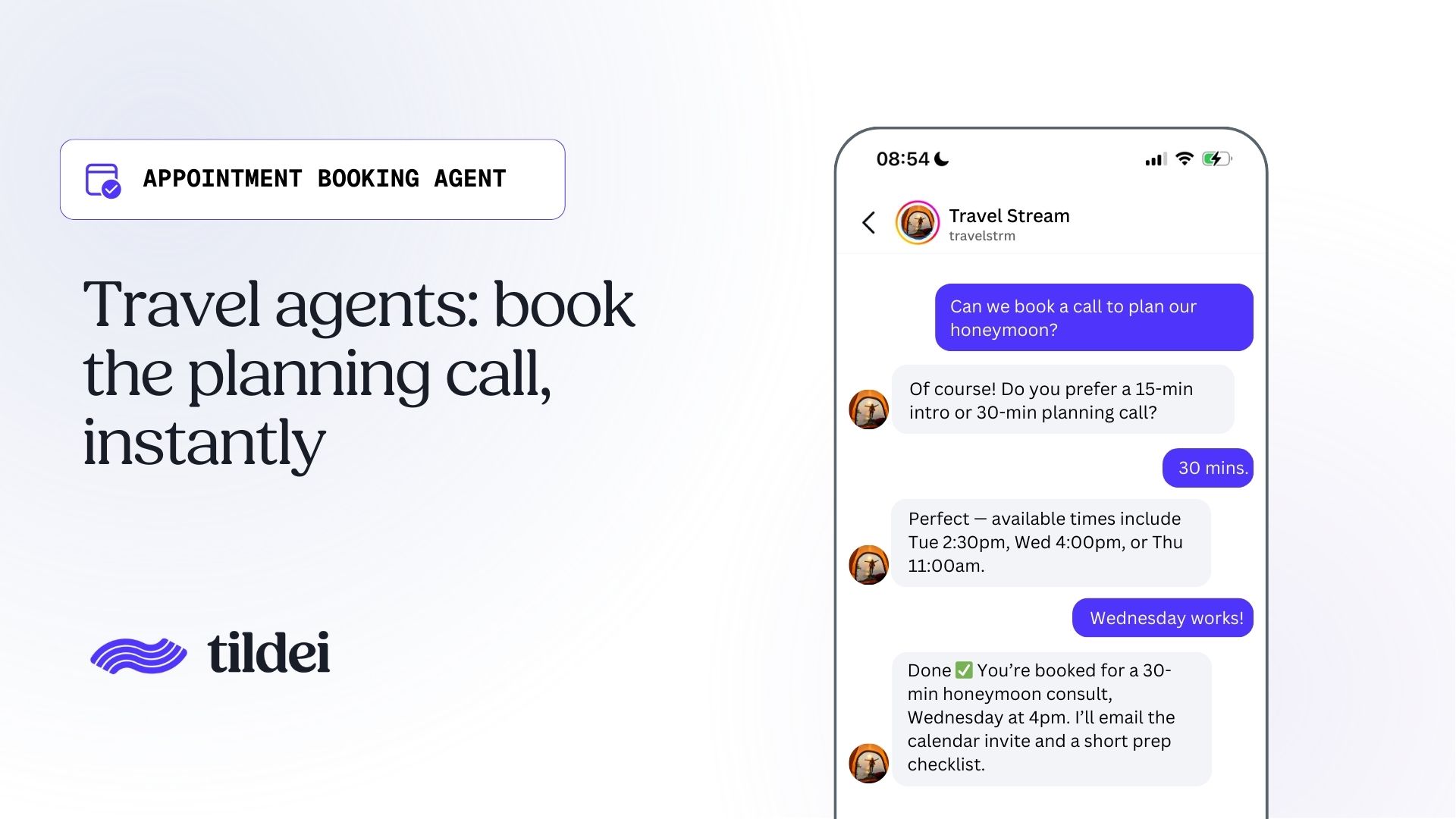
Agentic resources: The agent references a tailored set of resources to handle the request correctly. This includes:
- Your booking goals: e.g. maybe you want to prioritize scheduling high-value consultations or fill up slower days first.
- Your rules: what to ask and not ask, what times or staff to offer, when to automatically book vs. when to involve a human.
- Live availability data: a connection to the right calendars or scheduling system for that service/person/location, so it never offers a slot that’s actually booked.
- Service knowledge: understanding of each service’s duration, any prep or follow-up needed, and policies (e.g. cancellation rules, requirements like “no retinol a day before a facial”).
- System connections: integrations with your scheduling tools, CRM, marketing automation, etc., so that all actions (booking, updating records, sending emails) happen instantly and consistently.
Outcome: The result is a confirmed appointment plus all the trimmings:
- The appointment is booked and recorded in your scheduling system (calendar is blocked, meeting link generated if virtual, etc.).
- A confirmation is sent with key details (date/time, location or video link, prep instructions, cancellation policy).
- Your CRM and other systems get updated with the context (what service, which channel it came from, any noted preferences).
- Reminders are queued up to go out at the right times, and follow-up journeys (like post-visit thank you or feedback requests) are triggered.
- Your team can be notified as needed with the right context (so staff knows who is coming in and what for without digging for details).
Everything happens in seconds, and your team doesn’t have to lift a finger or copy-paste a single detail.
Benefits of an AI scheduling agent
An AI scheduling agent doesn’t just save time, it improves the experience for everyone involved. Here’s how:
For customers:
- Instant replies, even after hours: No waiting until tomorrow for a response, they get the info and booking confirmation right away, day or night.
- Fewer steps: The entire booking happens in the same conversation. They don’t have to click a link and navigate a form or play phone tag; the chat is the booking flow.
- More confidence: The agent provides clear confirmation, sends reminders, and makes rescheduling easy. Customers feel taken care of and are less likely to forget or no-show.
For the brand/business:
- More appointments from the same traffic: Every inbound message or inquiry can convert into a booking on the spot, even if it’s off-hours. You capture demand that might otherwise slip away.
- Cleaner attribution and better data: Because the agent ties the booking back to the source (e.g. which ad or social post led to the inquiry, what service they’re interested in), you get complete data in your CRM. No more guessing which campaigns actually drove appointments.
- Campaigns that convert instead of creating work: Say you promote a seasonal facial special or a free travel consultation in a campaign. Instead of your marketing team ending up with a flood of DMs and emails to sift through, the agent handles the surge of interest automatically. Customers book themselves, and your team isn’t left with an “inbox debt” after a successful campaign.
.jpg)
For your team (the simplest story):
- No more calendar Tetris: Your staff can stop juggling schedules, sending “does this time work?” emails, and updating calendars. That tedious coordination is off their plate.
- Focus on delivering, not admin: With scheduling taken care of, your team spends time on what truly matters : delivering the service (beauty treatment, travel advice, design expertise), instead of being part-time schedulers.
Common pitfalls (and how the agent handles them)
Even with great tools, scheduling has some classic pitfalls. Here’s how an AI scheduling agent preempts them:
- No-shows: Beauty appointments, travel consults, and design meetings can all suffer when people simply forget or get busy.
Agent solution: send a confirmation immediately, then smart reminders as the date approaches. If the customer needs to reschedule, it’s as easy as replying to the agent – no friction, so they’re less likely to ghost you.
- Complex edge cases: What about special situations? A spa client has allergies or needs a pregnancy-safe option. A travel client has an urgent visa deadline or a multi-city itinerary. A design project involves multiple decision-makers or a home visit.
Agent solution: you set guardrails for these scenarios. The agent knows when to gather more info, when to stick to strict rules, and when to handoff to a human. If it does escalate, it passes along everything it learned (e.g. “Client is interested in X, has Y constraint”) so your team can jump in seamlessly. - Wrong slot or wrong person: Sometimes a customer might accidentally book the wrong type of appointment, with an unavailable specialist, or for an inadequate duration.
Agent solution: rule-based scheduling prevents this. The agent only offers slots that match the service type, with the appropriate staff and correct duration, and it double-checks with real-time availability. The result is right first time bookings that don’t need reworking.
Short FAQ
- Q: Appointment scheduling vs appointment booking: what’s the difference?
A: “Booking” is just the moment of confirmation (picking a time and slot). “Scheduling” is the entire lifecycle around that booking: everything before and after the actual time slot. The AI agent handles the full schedule: from initial inquiry and qualification through to confirmation, reminders, and follow-up, not just the booking itself. - Q: Can it work across Instagram DMs, WhatsApp, SMS, and website chat?
A: Yes. Wherever your customers ask “Can I book?” – whether it’s a social media DM, a text message, or your live chat – the agent can jump in on that channel and guide them to a confirmed appointment without missing a step. - Q: How do we keep it on-brand and compliant?
A: You set the tone and rules. The agent is configured with your brand’s voice and follows your guidelines for what it can say or do. It also knows when not to automate (for example, you might require human approval for VIP clients or certain requests). This way, every interaction stays on-brand and meets any compliance requirements you have. - Q: What happens when a request is too complicated?
A: If the agent encounters a request that goes beyond its scope or rules, it will smoothly escalate to a human teammate. Importantly, it doesn’t just drop the ball, it transfers the conversation with full context (what the customer wants, what’s been asked and answered so far, etc.), so your team member can pick up without missing a beat. - Q: Does it update our CRM and other systems automatically?
A: Absolutely. The agent logs the appointment and any relevant details into your systems instantly. That means no manual data entry for your team and no forgotten notes. Your CRM, calendar, and marketing tools will all reflect the new appointment and any insights (like service type or source channel) in real time.
Ready to turn “Can I book?” into confirmed – automatically?
If you already have people reaching out asking to book, an AI scheduling agent is one of the fastest ways to boost both customer experience and your team’s efficiency. You’ll get more confirmed appointments from the same inquiries, fewer no-shows thanks to smart follow-ups, and a lot less admin work bogging down your staff.
Ready to see it in action? Book a demo to watch an AI scheduling agent turn “Can I book?” into a confirmed appointment in minutes.
Turn customer intent into confirmed appointments.
We’re excited to share that Tildei has been recognized by Built In as one of the 2026 Best Places to Work.
Now in its eighth year, Built In’s Best Places to Work program celebrates the companies shaping the future of work. In a rapidly evolving AI-first job market, recognition as a Best Place to Work helps employers stand out as trusted brands when candidates turn to tools like ChatGPT and Google AI Overviews to research where to work next.
“Today’s candidates discover the companies they want to work for using AI tools,” said Maria Christopoulos Katris, Founder & CEO of Built In. “Earning a Best Place to Work award not only signals to candidates that you invest in your people, it’s a lever to strengthen how AI search tools understand and represent your company’s story.”
Why this matters to us
At Tildei, we are shaping the future of marketing. Our powerful AI marketing agents can be activated across channels and tools — not as a bolt-on, but as a real layer of execution that connects to your existing marketing stack. The goal is simple: remove friction, reduce busywork, and help teams move faster without losing what makes a brand distinct. See how Tildei AI agents are transforming marketing operations in our latest blog post.
The culture behind the product
This award is a lovely moment, but it’s really a reflection of what it takes to build agentic systems that are trustworthy, useful, and genuinely adopted.
At Tildei, that looks like:
💪 Grit: When challenges arise, persist and finish strong.
🎯 Relevance: Focus relentlessly on what matters most now.
✨ Simplicity: If something can be simplified, simplify it.
🤝 Honesty: Speak the truth and act with integrity.
Mark Ghermezian (CEO):“We’re building marketing agents that help teams execute with speed and confidence across their entire stack. That only works if we build Tildei the same way, with a culture that empowers people to do deep, thoughtful work, and a mission that keeps us aligned as we scale.”
A team win (literally)
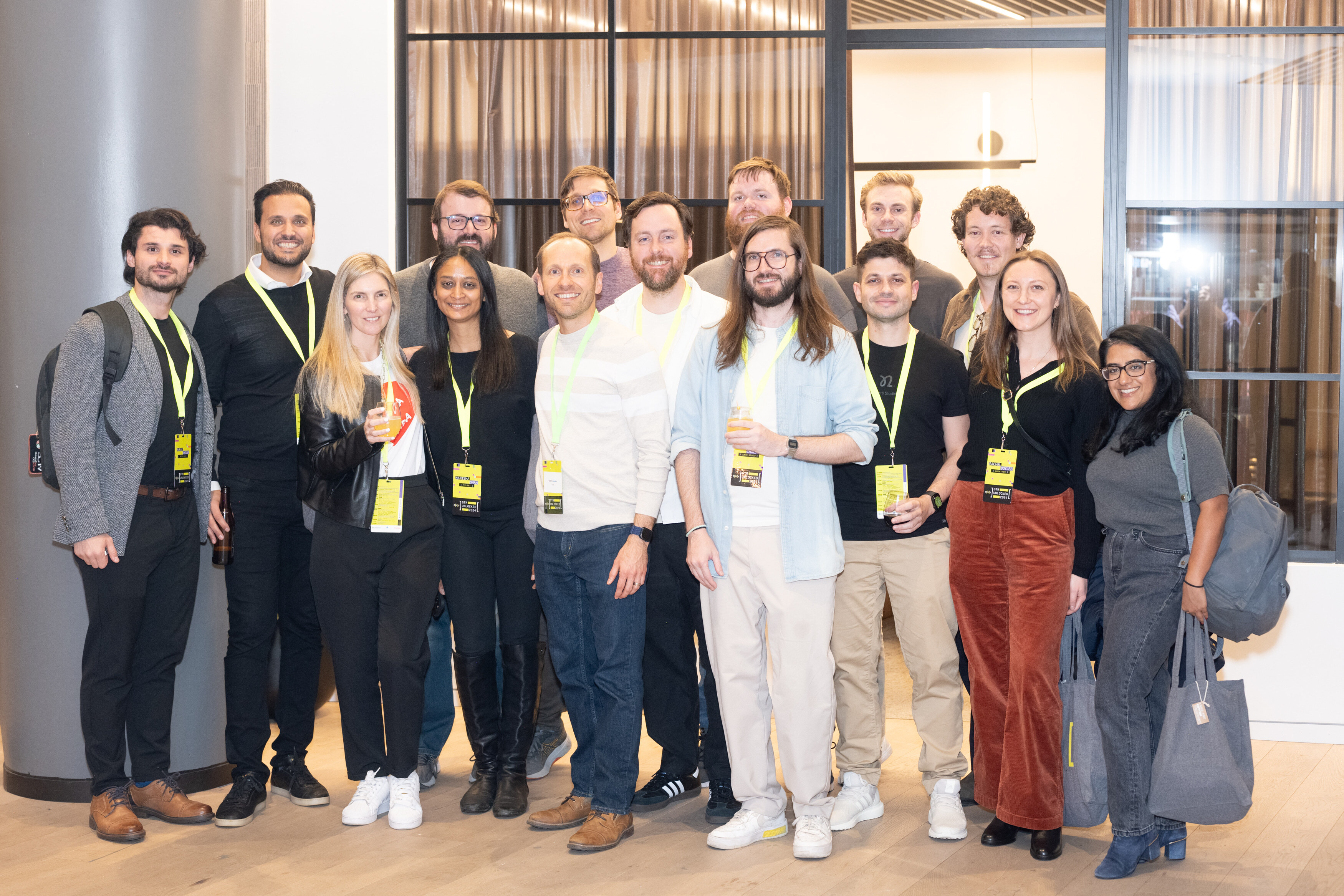
Because this recognition isn’t about a badge: it’s about the people building Tildei.
Want to join us?
While we’re taking a moment to celebrate, we know this is just the beginning. Tildei is growing: our AI marketing agents are helping more brands every day, and our roadmap is full of exciting challenges to tackle next. And we want more great people to join us on this journey! If our mission and culture sound like a fit for you, we’d love to talk.
Explore careers at Tildei to see our open roles, and learn what we’re building to understand how our marketing automation technology is changing the game. Here’s to an amazing 2026, and to keeping Tildei one of the best places to work for years to come!
Tildei has been recognized by Built In as one of the 2026 Best Places to Work
The booking is confirmed. The slot is in the calendar. From a reporting standpoint, you've done your job.
But the guest hasn't arrived yet, and a lot can happen between confirmation and the moment they walk through the door. They're at home trying to remember whether they need to prep anything. They have a vague memory of seeing a parking note somewhere but can't find it. They're quietly reconsidering whether Thursday at 11am really works, now that they're looking at their actual week. And in a meaningful percentage of cases, they'll either cancel last minute, no-show entirely, or show up unprepared and have a worse experience than they should have.
The pre-visit window is the period between a confirmed booking and the moment a guest walks through your door. It doesn't generate new demand and it doesn't close the initial booking, so it tends to get treated as optional infrastructure: a confirmation email from the platform, maybe a reminder text the morning of. But what happens in this window has a direct effect on no-show rates, day-of experience quality, and whether a first-time guest turns into a repeat guest.
What's actually at stake in this window
Most businesses send something between booking and arrival. The gap isn't effort, it's specificity. A generic platform confirmation tells a guest when and where, but it doesn't tell a spray tan client to exfoliate the night before, or a medspa guest to avoid retinol for 48 hours, or a family arriving at an adventure park to bring grip socks. When that context is missing, one of two things happens: the front desk fields the same five questions every single morning, or guests show up unprepared and get a result that's worse than it should have been.
That second outcome is the more expensive one. A guest who followed the prep instructions and had a great first visit will come back. A guest who showed up without exfoliating, got a patchy result, and quietly blamed the studio is gone. The prep note didn't feel like a big deal. The outcome it prevented absolutely was. As one multi-location brand put it plainly, "You really only have one chance at a first impression." The pre-visit window is when that impression starts taking shape.
There's also the no-show problem, which is more visible and quantifiable. A guest who no-shows isn't usually unhappy; they're disengaged. Life got busy, enthusiasm softened a little, and no one re-engaged them between the booking and the appointment. A well-timed message in the right window doesn't just remind them of the appointment. It re-activates the excitement that made them book in the first place.
The pre-visit sequence: four moments that change the outcome
The Confirmation That Actually Prepares
The moment a booking is confirmed, most guests have a version of the same unspoken question: now what? A confirmation message that answers this proactively sets the guest up for a better experience and removes the ambiguity that creates last-minute friction.
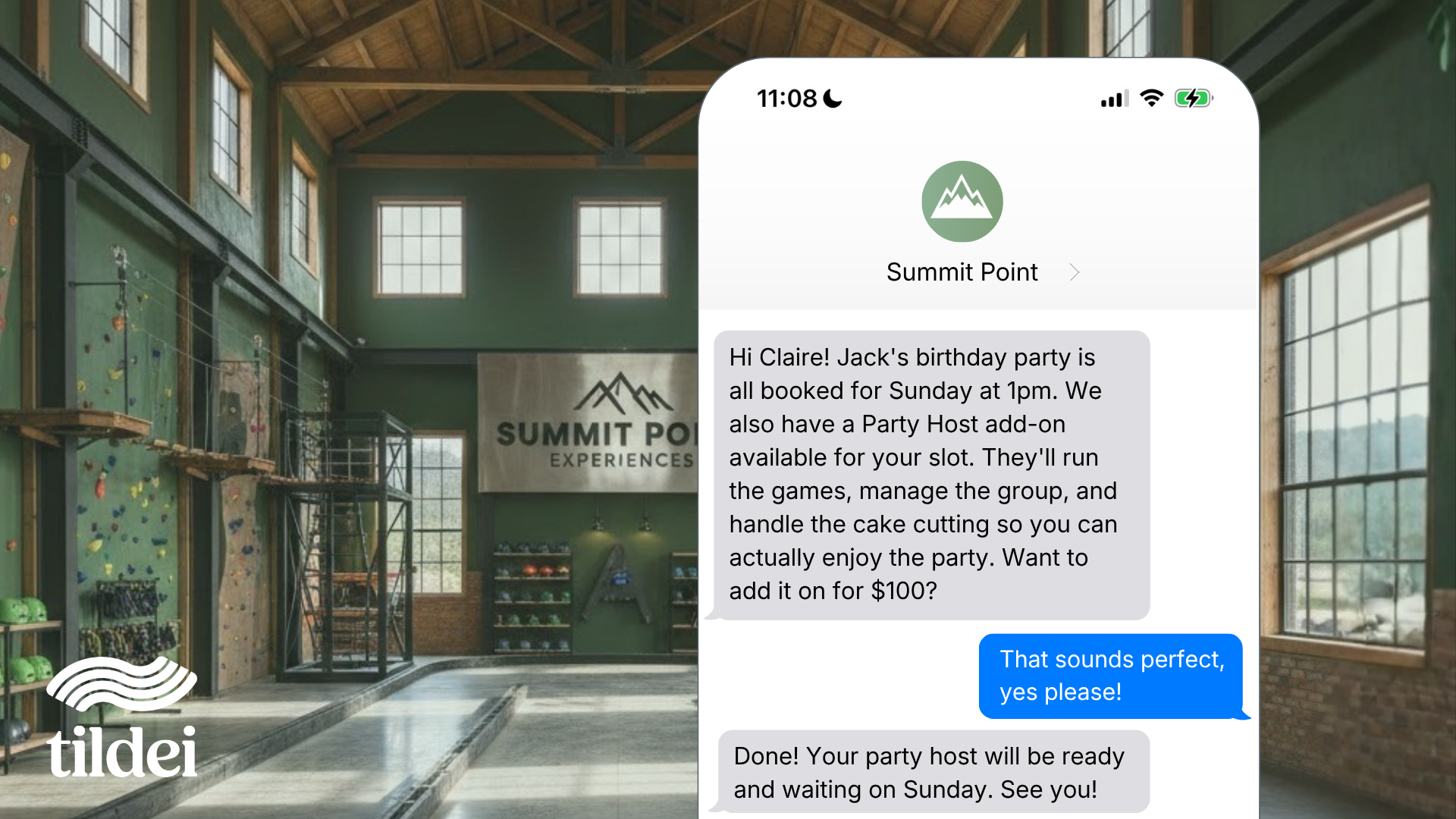
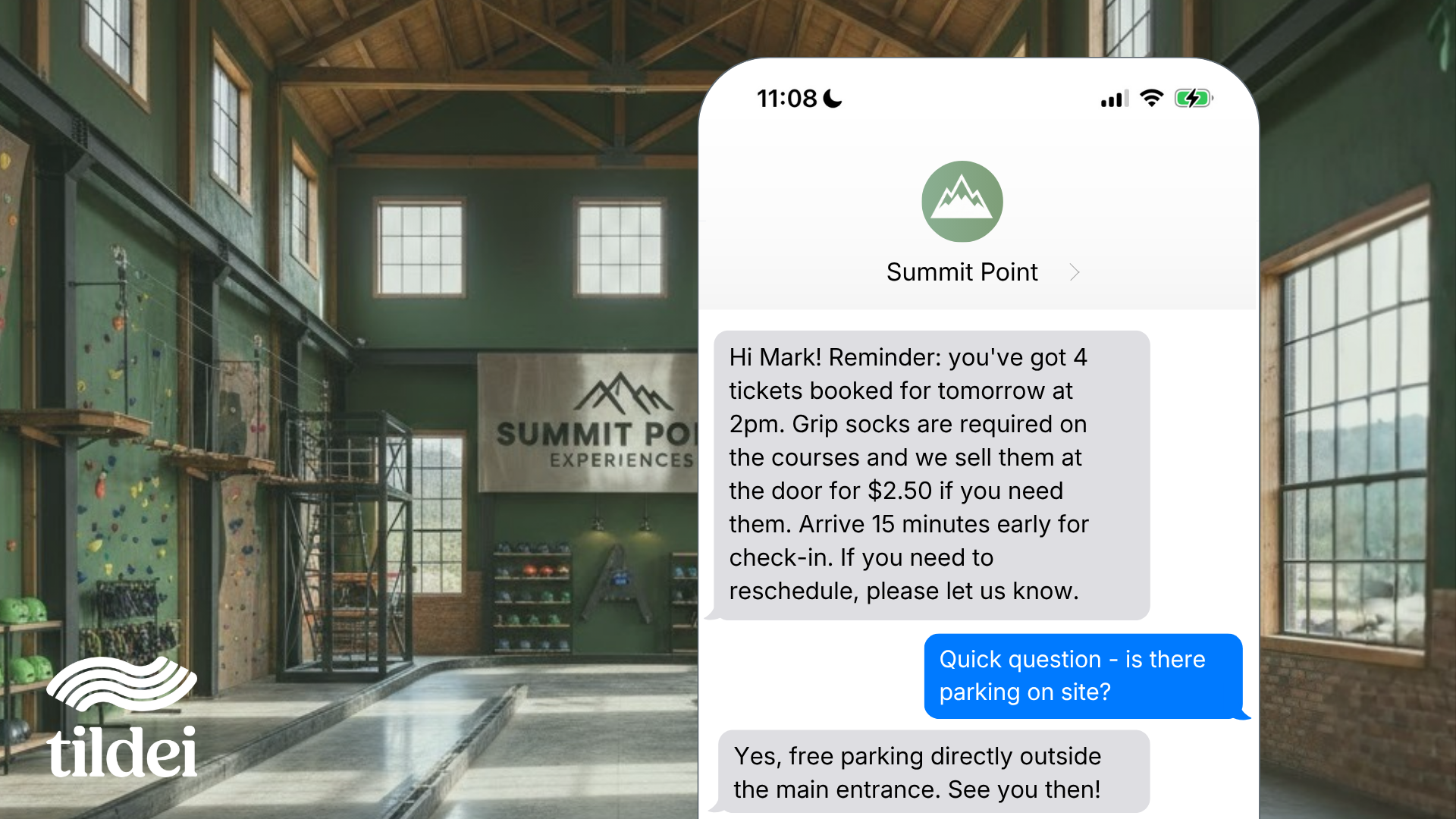
For a medspa, that's "avoid retinol for 48 hours, arrive with clean skin, and plan for about 75 minutes total." For a family entertainment centre, that's "wear comfortable clothes, bring grip socks (we also sell them at the door), and use the main entrance off the south car park." The specificity is what makes it land, and the specificity has to come from knowing the service and the business, not from a generic template.
This is also where expectations matter. A guest who knows what to expect when they arrive, how long the service takes, and who they'll be working with walks in with a different energy than one who spent 48 hours with unanswered questions. That difference shows up in the experience itself.

Prep Instructions at the Right Time
A reminder that lands six days before a spray tan is effectively useless. The information arrives too early, gets forgotten, and the client shows up without exfoliating anyway. The same reminder arriving 24 hours before, "Your spray tan is tomorrow. Exfoliate tonight and skip the moisturiser in the morning for the best result," gets acted on.
Timing is service-specific, and getting it right matters more than most businesses realize. For a hair colour appointment, the prep advice might be as simple as "come with dry, unwashed hair," which is easy to follow but only if someone tells you at the right moment. For a laser treatment, the pre-care window involves multiple steps across several days, and the reminder needs to account for that sequence. For an outdoor experience, the guest needs enough lead time to pack the right kit.
When a guest follows the prep instructions, their result is better. A better result produces a better review, a higher likelihood of rebooking, and a stronger sense that the business knows what it's doing. The prep message that gets ignored is a lost opportunity across all of those fronts.
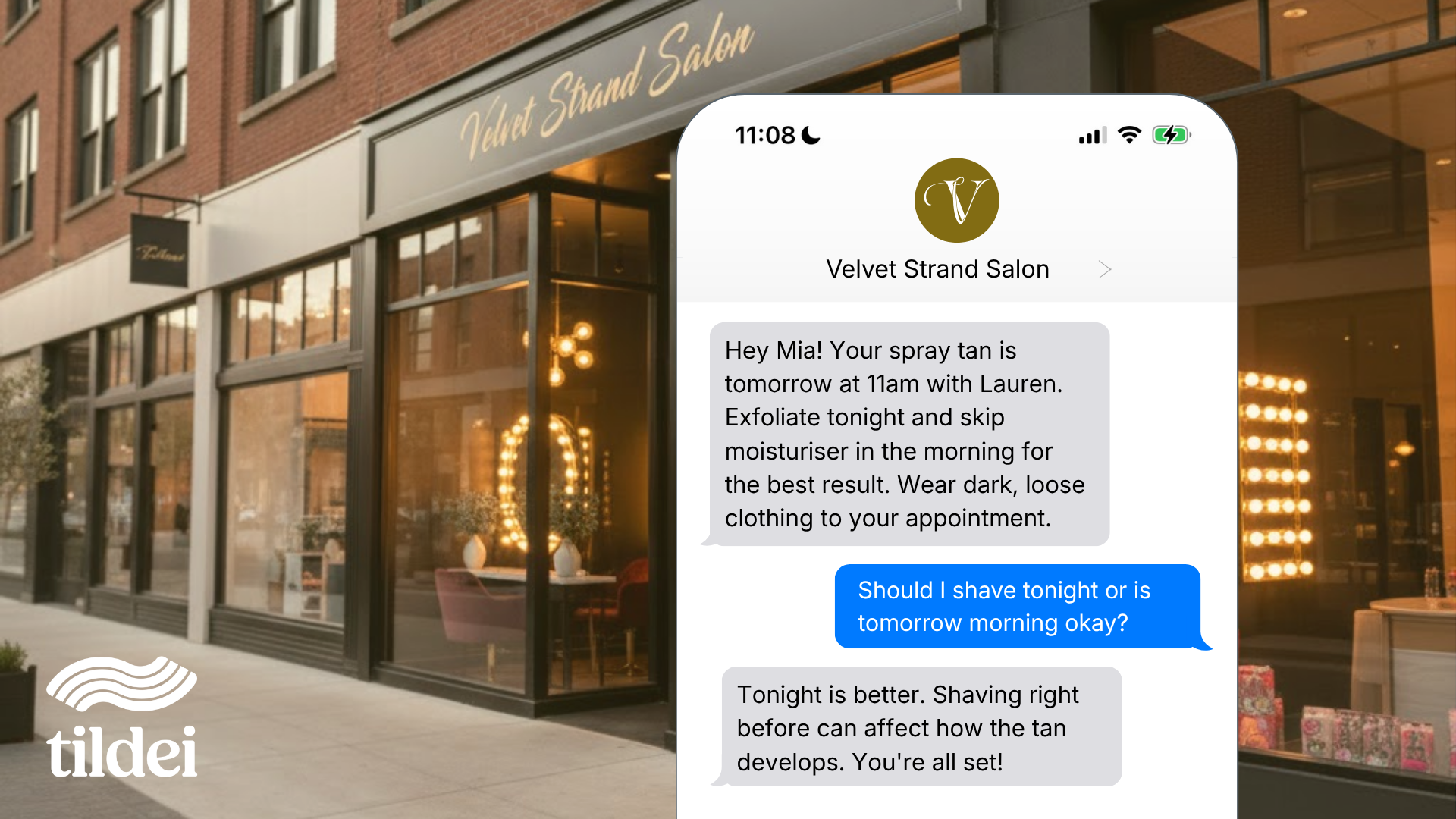
The Add-On Conversation
A guest who has already committed to a booking is in a different mindset than a guest who's still deciding. They're past the evaluation stage, their interest in the experience is high, and their openness to an upgrade is real in a way it wouldn't be on a cold outreach.
This moment works best when the offer is genuinely relevant. A guest who has booked a 60-minute facial is a natural candidate for a dermaplaning add-on. A family with a birthday party reservation is already thinking about making the day feel special, so a premium package offer lands as helpfulness rather than a sales push. The key is that the offer reflects what the guest actually booked, not a generic upsell campaign that goes to everyone on the list.
Done well, the add-on conversation generates incremental revenue from a guest who's already coming in, at a moment when they're disposed to say yes. Done badly, it's just another thing for the guest to ignore. The difference is whether the offer is clearly connected to their specific booking.
The Day-Before Reminder
The most direct lever on no-show rate is a well-timed message the day before the appointment. Not a generic "don't forget!" alert, but a short and warm confirmation: "You're booked with Jen tomorrow at 2pm at our Soho location. Reply if you need to reschedule."
Two things happen here. First, the reminder re-activates the guest's mental commitment to the appointment at the moment when it's most likely to slip. Second, the open door to reschedule rather than simply ghost reduces no-shows by giving guests an easy path that still keeps them in the calendar. A guest who reschedules is not a lost booking; they're a future visit. The difference between a no-show and a reschedule is often just whether someone made it easy to reschedule rather than disappear.
Why this doesn't happen consistently
These conversations aren't complicated. Every business knows, in the abstract, that good pre-visit communication reduces no-shows, improves the experience, and increases the likelihood of a second visit. The gap is execution: sending the right message to the right guest at the right time, for every booking, across every service type, without it becoming someone's manual job.
Front desks are managing check-ins, cancellations, and phone calls simultaneously. Marketing teams can send blast campaigns, but a blast is the same message to everyone on a fixed schedule that has nothing to do with when any individual guest actually needs to hear from you. The result is that most businesses pick one approach, usually a generic platform reminder, apply it uniformly, and lose most of the value in the process.
A spray tan studio that sends one reminder at the wrong time gets half the results of one that sends the right prep note 24 hours out. A medspa that doesn't confirm pre-care instructions loses guests who show up unable to be treated. A Family Entertainment Centre that doesn't send wayfinding information in advance spends the first 15 minutes of every visit helping families figure out where to go.
What the pre-visit sequence looks like with Tildei
When Tildei's Booking Agent handles the pre-visit sequence, every message is triggered by the specific booking: the service, the timing, the provider. The initial confirmation goes out with service-specific context rather than a generic receipt. The prep reminder arrives at the right window for that particular treatment type. The add-on offer reflects what that guest actually booked, not a campaign list. The day-before reminder goes to every guest, every time, without anyone on the team having to remember to send it.
None of these messages are the same for every guest, and none of them require your front desk, marketing team, or stylists to initiate. The pre-visit experience just happens, consistently, at the right moment.
What to measure
No-show rate is the most direct signal that pre-visit communication is working, and it's worth tracking by service type rather than as a blended average. A medspa laser appointment and a walk-in trim have very different no-show profiles, and a single number across the whole business hides what's actually happening.
Beyond no-shows, the metrics that matter are:
- Day-of cancellation rate: Good pre-visit communication converts last-minute cancellations into reschedules rather than straight drops.
- Add-on conversion rate from pre-visit messaging: Of the guests who received an add-on offer, how many took it up?
- First-visit repeat rate: Guests who arrive prepared and have a smooth experience are significantly more likely to book again, and the pre-visit window is a contributing factor even when it's not the only one.
The gap you don't see until it's costing you
A no-show is visible. You see the empty slot, you feel the revenue impact, and you know something went wrong. What's harder to see is the guest who showed up unprepared and had a slightly worse result, or the guest who arrived unsure and left without feeling the connection that would have brought them back. Those outcomes don't appear in a single report, but they accumulate over time in lower repeat rates and weaker word-of-mouth.
The pre-visit window is where you close that gap before it opens. It's quiet work, but it shapes the experience more than most businesses realize, and it's the last stage you fully control before the guest is in the room.
Tildei's Booking Agent handles the full pre-visit sequence: service-specific confirmations, timed prep instructions, relevant add-on conversations, and day-before reminders, automatically, for every booking.
Want to see what the pre-visit sequence looks like for your business? Book a demo.
The appointment is over, and the guest loved it. They tipped well, said "see you next time", and walked out the door.
And then nothing. Time passes by, and the customer doesn’t return; they go somewhere else, not because they were unhappy, but because you weren't in the conversation when it mattered.
This is the post-visit window: the period right after a customer leaves, where loyalty is either built or quietly lost. Businesses growing their customer lifetime value treat the post-visit window as the most important marketing opportunity they have.
Where this fits in the booking lifecycle
The post-visit window sits at the end of one appointment cycle and the beginning of the next:
Booked → Pre-Visit → Service → Post-Visit → Rebook → Repeat
Everything before the visit has gotten significant attention: confirmation emails, reminder texts, and intake forms. But the post-visit stage, the window immediately after the guest leaves, is at the highest risk and biggest opportunity to build an exceptional customer experience. And it covers more than just rebooking. Done well, it's a sequence of distinct conversations, each with a different job.
The post-visit sequence: four conversations that build lifetime value
Moment 1: The Product Follow-Up (same day or next day)
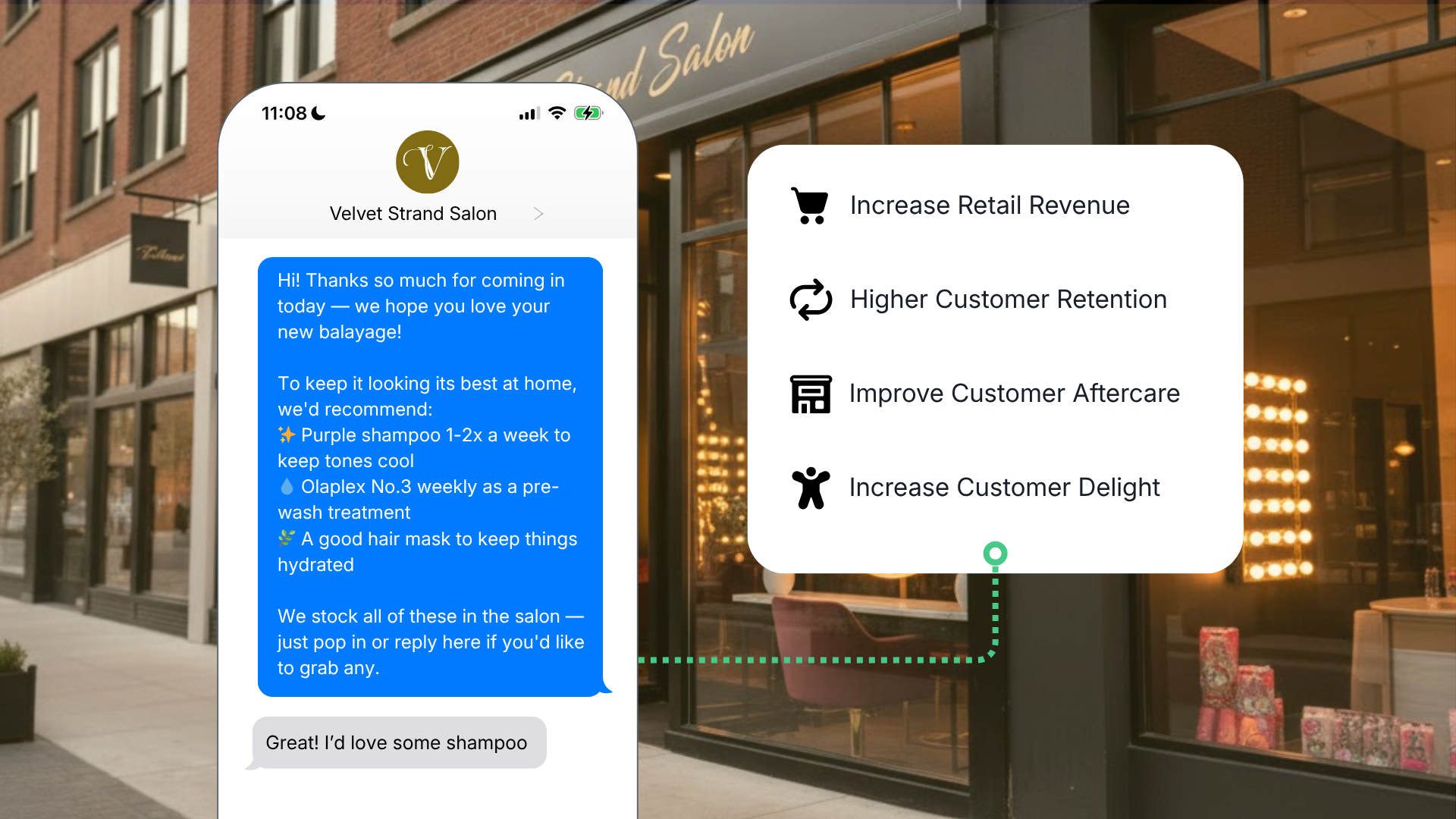
A guest just got a balayage. Their stylist used three specific products during the service. The guest loved the result and would genuinely buy those products; it’s an ideal opportunity to tell them what they were and make it as simple as possible for them to make a purchase.
Most of the time, this is a missed opportunity. The stylist mentioned it chair-side, the guest nodded, and by the time they got home, they'd forgotten the brand name. The front desk didn't bring it up at checkout, so the sale didn't happen.
The post-visit product follow-up fixes this without putting the burden on your staff. The day of or after the appointment, the agent sends a message: “Here are the products your stylist used today, and here's how to recreate the look at home. You can purchase the products here.”
This isn't a simple sales push; used correctly, it's a useful extension of the service itself. Stylists are experts and don’t always have time to act as the salesperson, and this framing keeps it that way. The agent does the follow-through that your stylists don't have time to do themselves.
The same logic applies beyond beauty:
- A spa treatment recommends products that the guest could use at home.
- A tour operator has gear, add-ons, or related experiences worth surfacing.
In every case, the moment right after the service is when the customer's interest is highest.
Moment 2: The Review Ask (24–48 hours after)
Reviews drive discovery, especially on Google, where they influence search ranking and first impressions. But many businesses either don't have the means to ask, ask at the wrong time, or ask in a way that gets ignored.
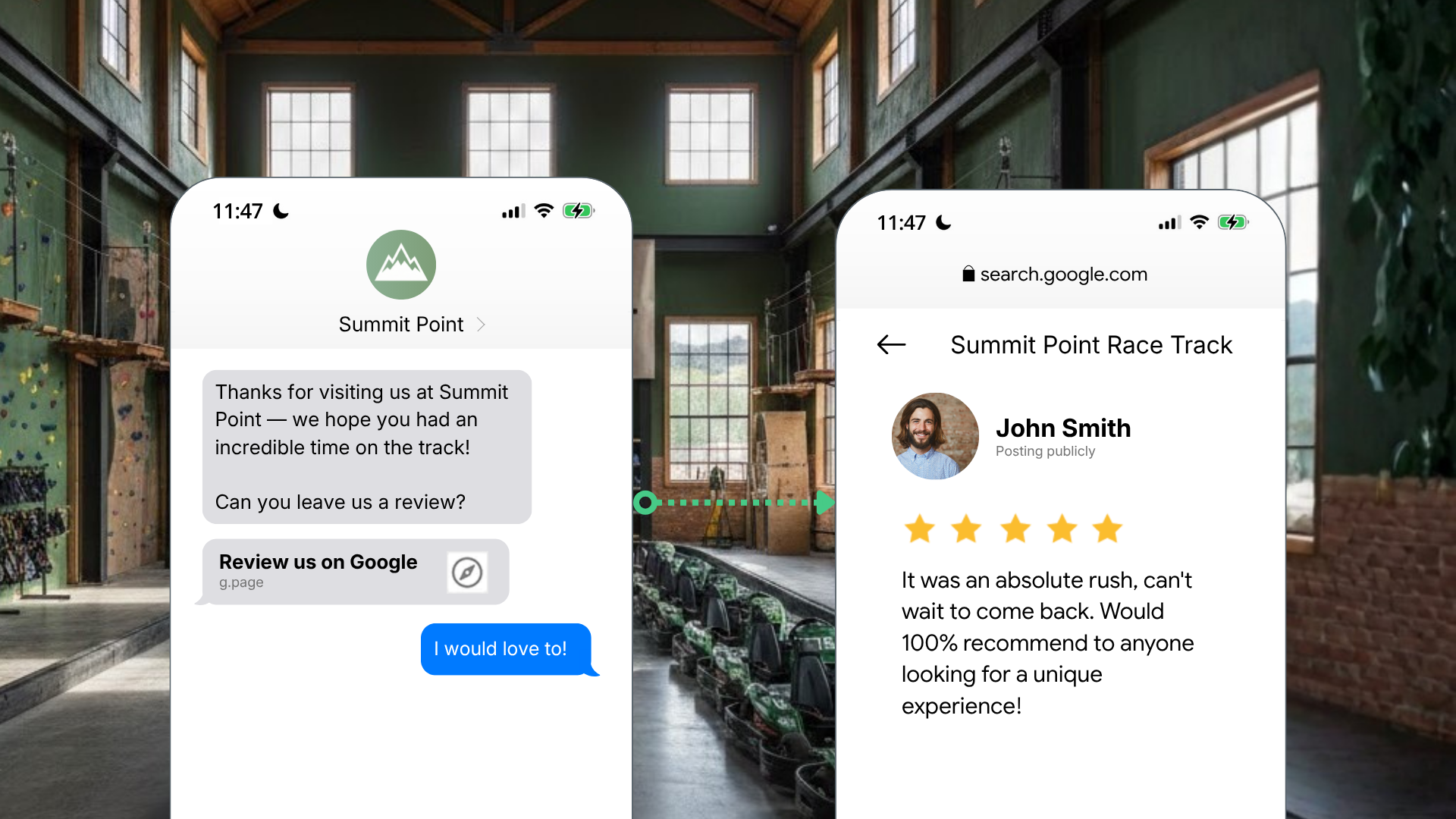
Asking at checkout is too early. The guest is still processing, gathering their things, and managing payment, but asking via email days later gets buried. The sweet spot is 24 to 48 hours after the appointment, when the experience is fresh, but the guest has had time to settle.
A short, conversational message: "Hope you loved your visit! If you have a moment, a quick Google review would mean a lot to us." Paired with a direct link outperforms anything more elaborate. The brevity respects the customer's time, and the timing catches them while their visit is still fresh in their minds.
A review request is exactly the kind of follow-up that is valuable and consistent in theory, but can be manual and forgettable in practice. An agent handles it automatically, for every customer, every time.
Moment 3: The Service Upsell (timely, not generic)
Not every customer who books a haircut knows what else your business offers. Not every spa guest who comes in for a massage knows about the facial package. Post-visit is a natural moment to introduce services that complement what the customer just experienced, because you now have the context and preferences of your customer that you didn't have before.
A generic "check out our other services" email is easy to ignore. A customized message that says "You came in for a color last month and we just launched a glossing treatment that a lot of our color clients have been loving." is a different conversation. It's relevant, it's personal, and it's based on what the customer actually did.
This is also where new service or product launches live. Existing customers who already trust you are the best audience for anything new. The post-visit window gives you a natural reason to reach out that doesn't feel like a blast campaign.
Moment 4: The Rebooking Conversation (service-window timed)
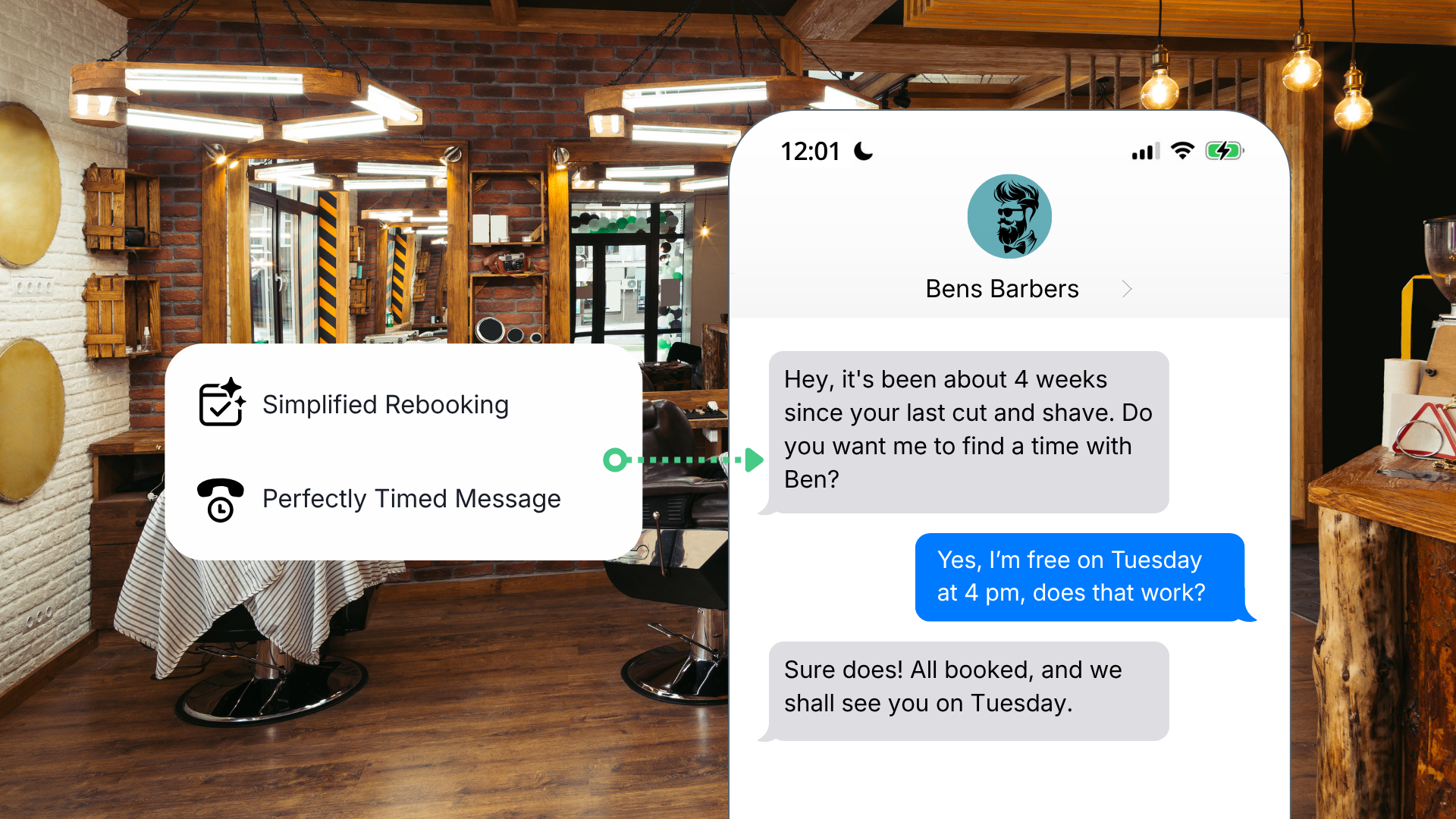
Rebooking is the most familiar piece of the post-visit sequence, but it's still the most commonly dropped. Asking at checkout puts the guest on the spot. A generic "we miss you" email sent 90 days later is too late and too impersonal. What actually works is reaching out at the right moment, based on the service they received, not a fixed campaign schedule.
You can estimate when your customers should be revisiting for their next booking:
- A short-cut client needs to come back in 4 weeks. A long-cut client in 8–12.
- A nail gel manicure client in 2-3.
- A guest who attended a seasonal tour event has a natural window the following year.
The timing isn't a guess; it's built into the service itself.
When outreach arrives at the right moment, with the right context: "Hey, it's been about 6 weeks since your last color, want me to find a time with Jen?" Rebooking becomes a one-reply decision instead of a multi-step research project. The customer doesn't have to remember, and your stylist or service provider doesn't have to make an awkward ask.
Why doesn't this happen consistently today?
Every one of these conversations is valuable, and every operator knows they should be happening. They often don’t happen reliably at scale because they all require someone to remember, initiate, and follow through for every customer, at the right time, with the right message.
Stylists are busy behind the chair, and front desk teams are managing check-in, checkout, and phones simultaneously. Marketing teams can send email blasts, but a blast isn't a timely, personal follow-up; it's the same message to everyone, on a fixed cadence that has nothing to do with when any individual customer actually needs to hear from you.
The result: the post-visit window closes with most of the value in it being lost:
- Retail sales don't happen.
- Reviews don't get asked for.
- New services don't get surfaced.
- And rebooking happens late, inconsistently, or not at all.
What the post-visit sequence looks like with Tildei
When an agent handles this sequence, each moment can be triggered based on what that specific customer did, not just a campaign calendar.
- The product follow-up goes out the same day, tied to the services recorded in the appointment notes.
- The review ask goes 24 hours later, with a direct link.
- The upsell or new service introduction goes when it's relevant to what that customer has done before.
- The rebooking outreach goes when the timing is right for the service they received.
None of these messages are the same for every customer, and none of them requires you to remember to send them.
The result is a post-visit experience that feels like it came from a business that knows its customers and stayed in touch, because in every practical sense, it did.
What to measure
Post-visit isn't one metric; it's a sequence, and each stage has its own signal:
- Product Attachment Rate: What percentage of guests purchase a product following a post-visit recommendation?
- Review Conversion Rate: The number of guests who receive a review request, and how many complete one?
- Upsell Conversion Rate: How many guests book an additional or new service following a post-visit introduction?
- Rebook Rate within service window: What percentage of guests rebook within the natural window for their service?
- Customer Lifetime Value: What is the average revenue per customer over 12 and 24 months? The ultimate downstream indicator of how well the post-visit is working.
A guest who experiences the full sequence: product follow-up, review ask, timely upsell, well-timed rebooking prompt, is a fundamentally different customer than one who got a checkout reminder and a generic email 90 days later.
Where to start
You don't need to deploy the entire sequence at once. Simply pick the moment where you're losing the most value today.
If retail sales are the gap: Start with the product follow-up. Log what was used at the appointment and let the agent send it the same day. The customer's engagement with what they just experienced is highest in that window.
If reviews are the gap: The review ask is one of the simplest automations to deploy and one of the most visible in its impact on discovery. Start there, measure lift, and build from it.
If rebooking is the gap: Start with your highest-volume service and define the natural rebooking window. Let the agent handle outreach for that segment before expanding to others
Tildei's agents handle the full post-visit sequence: product follow-ups, review requests, service upsells, and smart rebooking, automatically, for every customer, every time. Book a demo to see it in action.

You currently already have a top-of-funnel plan: spending on ads, making sure you show up on Google, you may even have a sign outside your storefront. The channels are working, people are finding you. But what's next, and what can be done to level up your growth efforts?
- Someone clicks your Meta ad and lands on a booking form, but they abandon on mobile.
- Someone finds you on Google Maps and calls, gets no answer, and moves on.
- Someone walks past your storefront, scans nothing, and keeps walking.
The interest was real, but the booking never happened, and it becomes a frustrating cycle.
Top-of-funnel isn't a traffic problem for most businesses; it’s often a handoff problem. And fixing that handoff (across the channels you already invest in) can be a real problem and is where the conversion opportunity sits.
Where this fits in the booking lifecycle
Most of the conversation around AI agents focuses on the middle and bottom of the funnel: booking flows, rebooking reminders, and cancellation saves. Those stages matter, but the lifecycle starts earlier.
Awareness → Interest → First Contact → Booked
The top-of-funnel is where a potential customer moves from awareness to first contact. It's the moment where a customer decides to make a booking, or they don’t. The channels below are where that decision happens, and in each one, there's a specific friction point that can mean a new customer booking or a missed opportunity.
The three first contact channels
Channel 1: Meta Ads
Meta is where a significant share of customer discovery happens, especially for salons, spas, family entertainment, and franchise locations. But the standard path from ad to booking is full of friction and customer drop-off.
The typical flow: customer sees an ad → clicks → lands on a website → finds a form or calendar integration → tries to navigate it on mobile → drops off.
The customer who clicked your ad already showed intent. There is a faster way to honor that intent than a form.
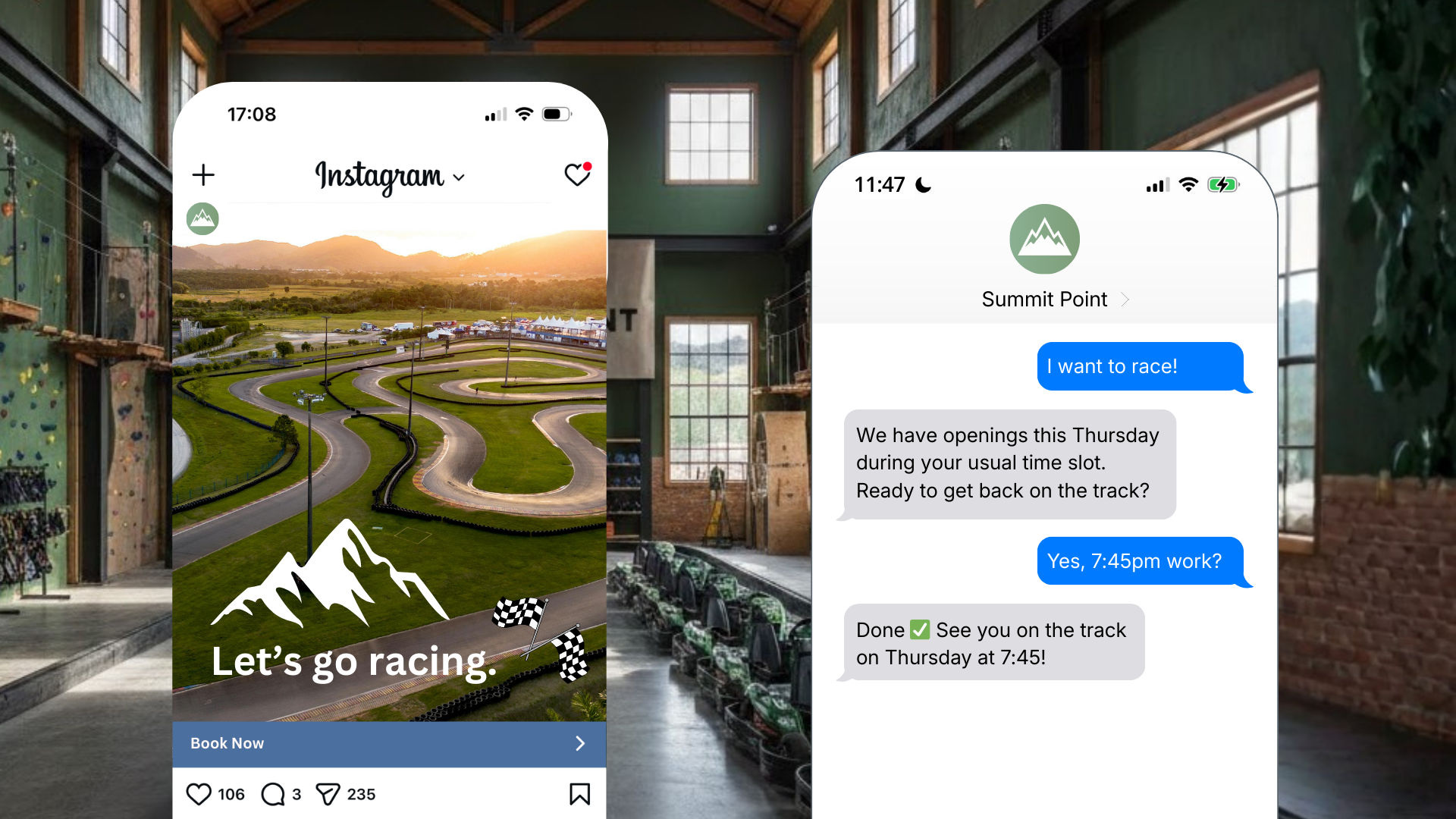
The better handoff: Click-to-message ads open a direct conversation instead of sending someone to a page. If that conversation is handled by an agent that can check your real availability, match a customer to the right service, and confirm the booking, the customer goes from interested to booked in the same session, on their phone, without ever touching a form.
The same logic applies to organic social: A post that prompts "DM us to book" or "Comment BOOK" isn't just an engagement play. If your agent handles those DMs, answering questions, checking availability, and confirming appointments, every piece of content you publish becomes a live booking channel. Paid and organic work exactly the same way, with no separate setup required.
Meta's own data reflects where consumer behavior is going: Click-to-message ad revenue in the US grew more than 50% year-over-year in Q4 2025. Businesses aren't running these ads to experiment; they're running them because they convert.
Channel 2: Google Business
When someone searches for your business on Google, they typically see two options: call or visit your website. Both are high-friction for someone who's ready to book.
The problem with calling: They reach voicemail, get put on hold, or call during a gap between the ad and your actual hours. The moment passes, and the customer moves on.
The problem with the website: Most websites are not optimized for mobile booking, and there are too many steps between "I want to book" and "I'm booked." or they incorporate long-winded forms with multiple steps.
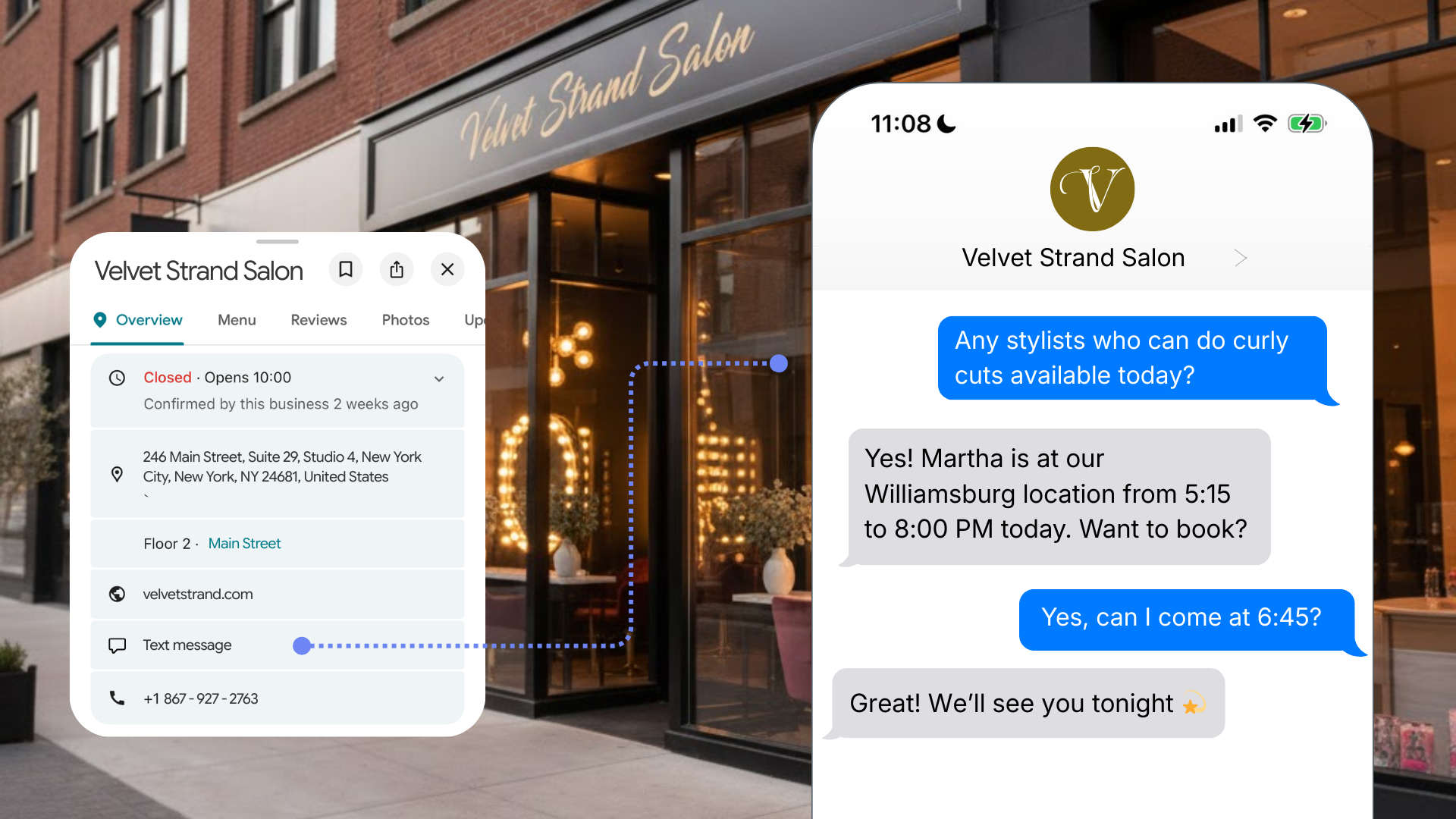
The better handoff: Google Business profiles can surface a text CTA, instead of "Call" the button says something like "Text us to book." The customer taps it, their messaging app opens, and they're immediately in a conversation with your booking agent. There is no hold music, no unnecessary website navigation, and no form on a 5-inch screen.
For businesses that rely heavily on Google Search and Maps for discovery, this is a meaningful conversion lever. The customer's intent is highest in the search moment, and the faster you move them from search to conversation and on to a confirmed appointment, the more of that intent you capture.
Channel 3: In-Store and In-Real-Life
Walk down any commercial street, and you'll see the same thing: QR codes everywhere, on window clings, A-frames, receipt footers, and fitting room mirrors. Some of them go nowhere useful.
The ones that work do something specific: they open a conversation at a high-intent moment.
The opportunity: A customer who is already in your space, or walking past your door, is a high internet opportunity. They may have just had a great service and want to rebook, or they may be walking by and thinking, "I should really do that." A QR code that says "Scan and text to book your next appointment" gives them a frictionless way to act on that impulse right now, before they forget.
When that QR code opens an SMS conversation (or the app of their choice) with an agent that can actually make the booking while checking availability, confirming the service, and sending a confirmation, the lead that started at a sidewalk board turns into a confirmed appointment, often before the customer has left the block.
The in-store moment is one of the highest-intent touchpoints you have, but it often walks out the door.
Why do current tools fall short?
Each of these channels already gets traffic, but the reason they don't convert at the rate they should comes down to one thing: there is too much friction in the handoff, and the customer is asked to do too much work.
- A form requires five fields and a separate login.
- A calendar widget on mobile requires scrolling, tapping, and re-tapping.
- A phone call requires timing, patience, and someone on the other end.
At every one of these steps, a percentage of customers who were ready to book decide not to.
Generic chatbots don't solve this. The moment someone wants to actually book, it's "let me connect you with our team" which is just another handoff, not a resolution.
What closes the gap is an agent that can handle the full conversation: answer the question, check real availability, confirm the service, and complete the booking, in the same channel where the customer already is.
- No slow redirects.
- No unnecessary forms.
- No lengthy waiting.
What to measure?
Top-of-funnel success isn't just traffic. Once you've connected your booking agent to these channels, the metrics that matter are:
- Click-to-conversation rate: What percentage of the people who click your ad or tap your Google CTA, start a conversation?
- Conversation-to-booking rate: From the number of conversations that start, how many end in a confirmed appointment?
- Time to confirm: How quickly does an interested customer become a booked one?
- Channel source: Which touchpoint (Meta, Google, in-store) is driving the most confirmed bookings, not just the most clicks?
The shift worth making isn't spending more on any one channel. It's measuring whether the channels you already invest in are actually converting intent into bookings, and fixing the handoff for the ones that aren't.
Where to start?
You don't need to overhaul every channel at once. Pick the one where you're already generating the most interest and losing the most potential customers.
If Meta ads are a core part of your acquisition strategy, start there: Swap your landing page CTA for a click-to-message flow and let the agent handle the booking conversation end-to-end.
If Google Search and Maps drive significant discovery for your business: Check whether the text CTA is available in your Google Business profile and activate it. This is one of the lowest-lift changes with meaningful upside.
If you have physical locations with foot traffic: Put a QR code in the right place with the right prompt. "Text to book" on a window cling or receipt card is a simple test with a clear feedback loop.
Start with one, measure it, and then extend the same pattern to the next channel.
Tildei's agents work across Meta ads, social DMs, Google Business, SMS, and in-store QR flows to turn top-of-funnel interest into confirmed bookings, without adding headcount. Book a demo to see it in action.
Every booking starts with a question. Most of the time, that question goes unanswered, and the customer moves on. Usually, just because they had one thing they needed to know and there was no easy way to get it.
A first-time spray tan client wants to know if she needs to prep her skin before coming in. A mum wants to know if the climbing wall is okay for her six-year-old. Someone's trying to decide between two facial options and doesn't know where to start.
These aren't difficult questions. But if your website can only offer a contact form, a FAQ page, or a "we'll get back to you", a lot of those people will just move on.
The gap nobody's really solved
Booking businesses spend a lot on getting people to their page. SEO, ads, social: all of it designed to drive traffic. And then there's the booking flow itself, which most businesses have put real thought into.
But the bit in between? The moment someone's interested but not quite ready? That part's mostly been left to a static FAQ and crossed fingers.
For beauty and FEC businesses especially, this matters. These aren't impulse purchases. Someone booking a laser treatment or planning a kids' party wants to feel confident before they commit, and that confidence usually comes from getting a few things answered first.
One med spa we spoke to described their industry as "intricate, with a lot of treatment options, products, and customers with tons of questions." Their entire call centre, a team of six to eight people, exists almost entirely to handle those questions before a booking can happen. Every single enquiry, routed through HQ, manually.
That's not scalable. And it's definitely not fast enough.
The six things customers need to know
The questions change depending on your business, but the themes are pretty consistent:
Is this right for me? — "Which facial works for sensitive skin?" or "I've never had a spray tan before, where do I start?"
What's actually included? — "Does the deluxe package cover everything, or are there add-ons?"
What's the experience like? — "What happens during the appointment?" or "How long should we set aside for the whole visit?"
What if plans change? — "Do you take deposits?" or "What's your cancellation policy?"
How do I prepare? — This one's easy to underestimate. A spray tan client who shows up without exfoliating gets a worse result, and that's on the brand, not the customer. Same goes for a family showing up to a venue without the right kit. The prep question matters.
Can I trust you? — "Who'll be doing my treatment?" or "Do you have reviews for this specific service?"
A FAQ page might cover some of these. But it can't handle the combinations, and it definitely can't ask a follow-up. When someone's trying to figure out which of three treatments is right for their situation, they need a conversation, not a list of bullet points.
What actually works: keeping the answer in the flow
The research on this is pretty clear: when someone has a question and can't get a fast answer, they don't wait around. Response time matters enormously, and not in a "24-hour turnaround is fine" kind of way. We're talking minutes.
The fix isn't a bigger FAQ or a faster email response time. It's keeping the question and the answer in the same place the customer already is: whether that's your website, an Instagram DM, or an SMS thread.
Tildei's Discovery Agent handles this. Instead of pointing someone to a form or a help page, they get an actual conversation: one that knows your services, your policies, and your availability, and can take them from "I have a question" to "I'm booked" without any handoffs.
What that looks like in practice
At a beauty studio
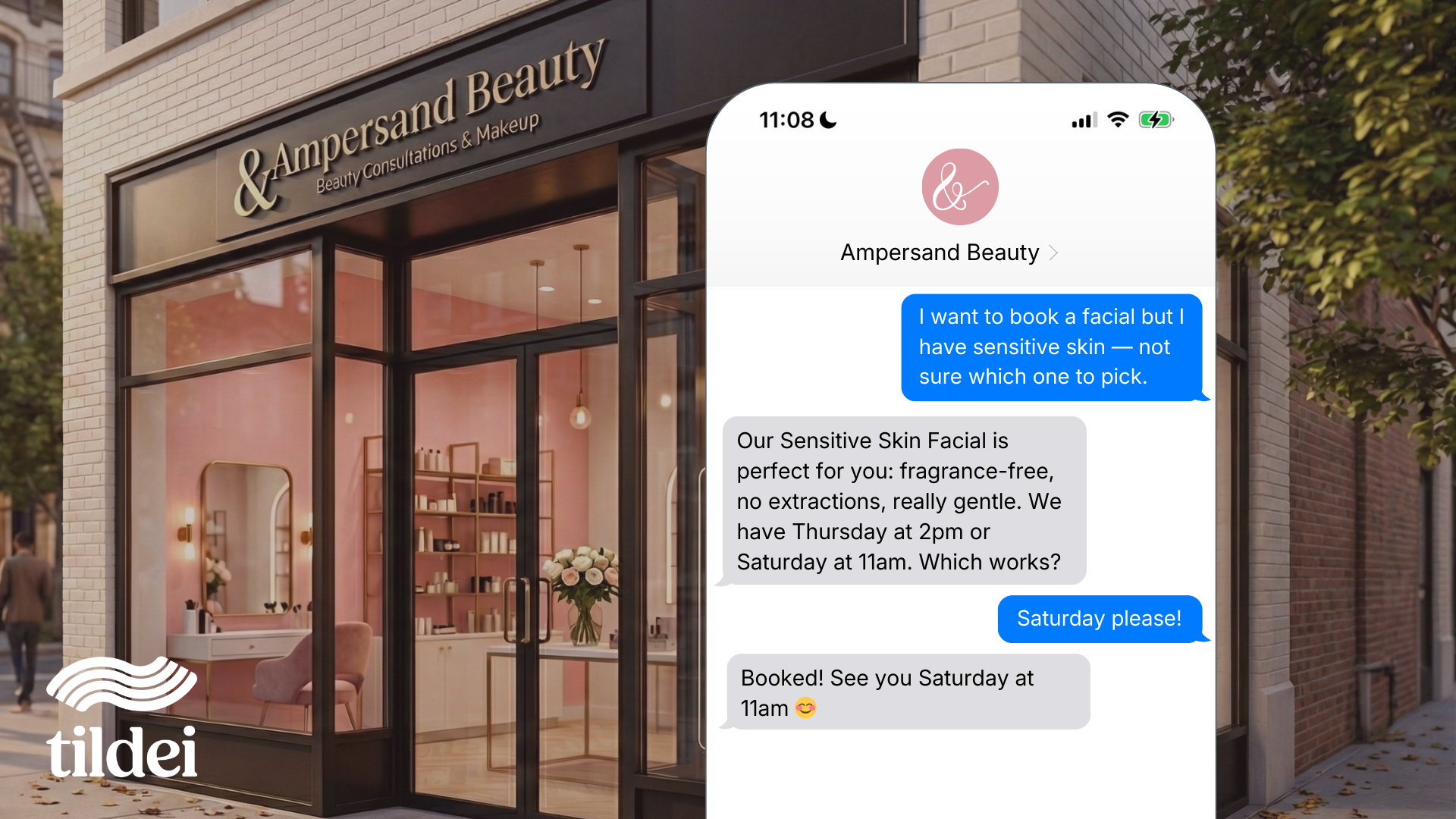
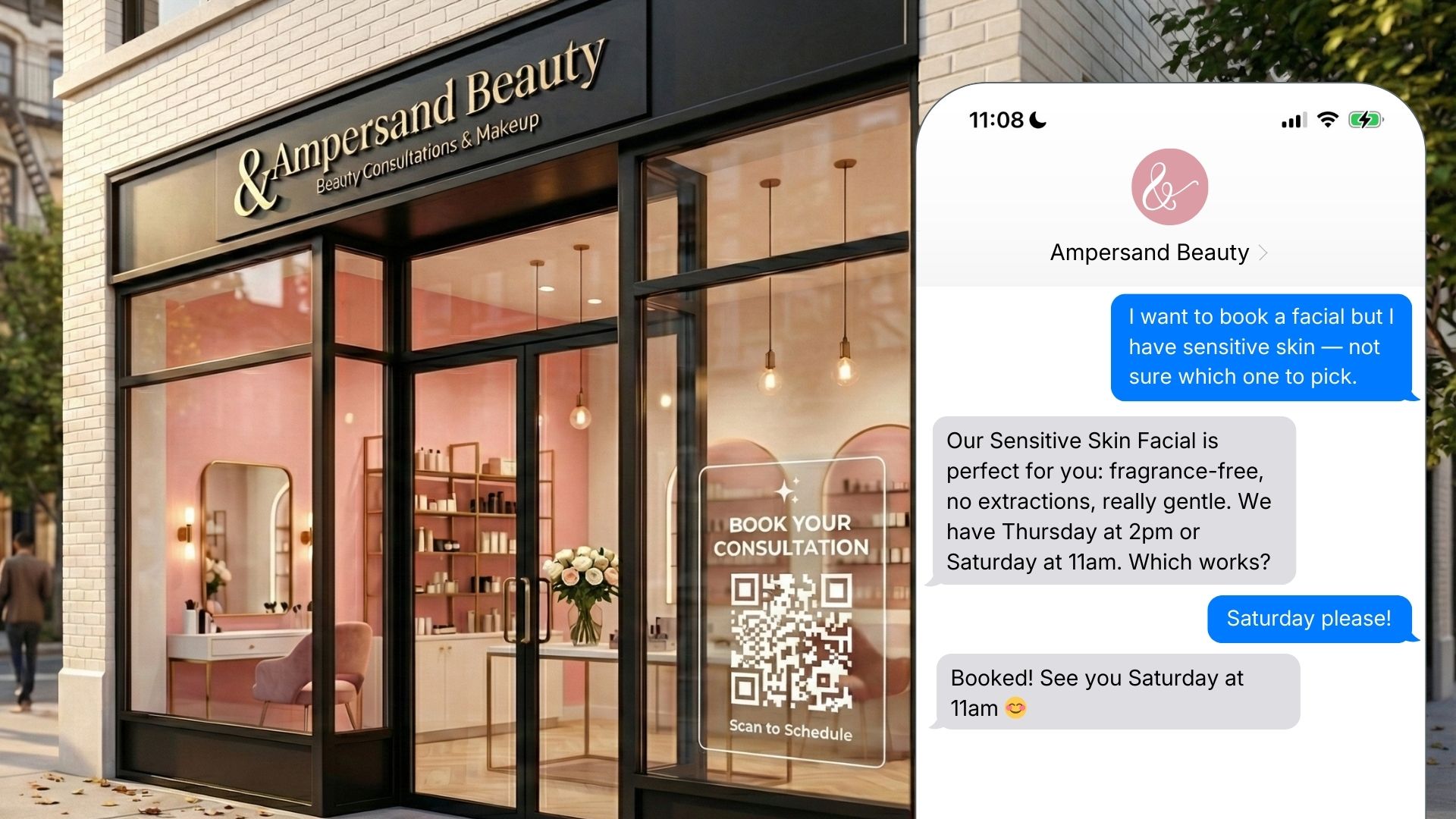
A client messages asking which facial suits sensitive skin. The agent recommends the right option, explains what makes it a good fit, and offers two available slots. She picks one. Booked.
At a family entertainment centre
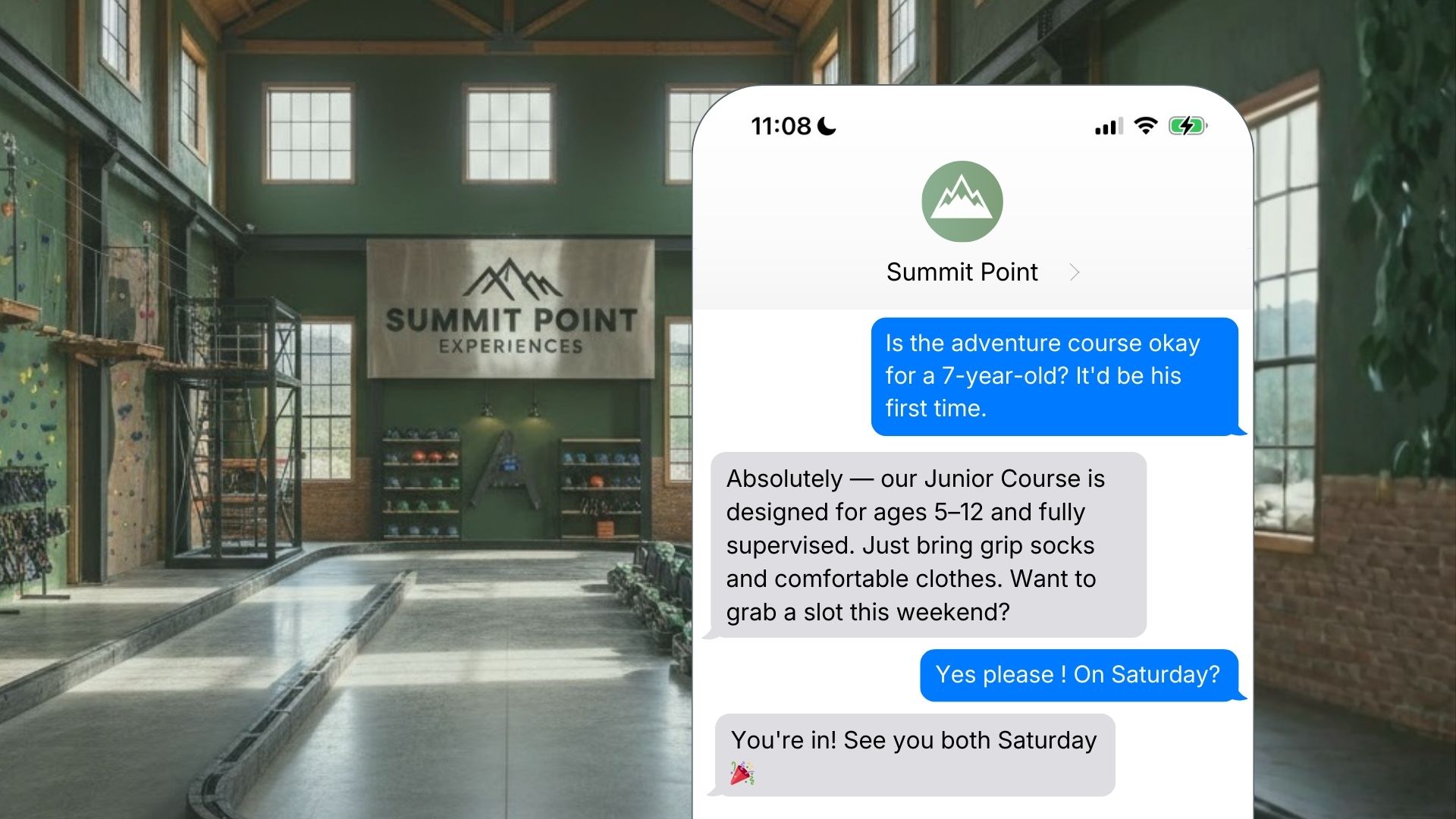
A mum asks if the adventure course is okay for her seven-year-old. The agent confirms it's designed for ages 5–12, tells her what to bring, and asks if she wants to grab a slot for the weekend. She does.
For a first-time spray tan client
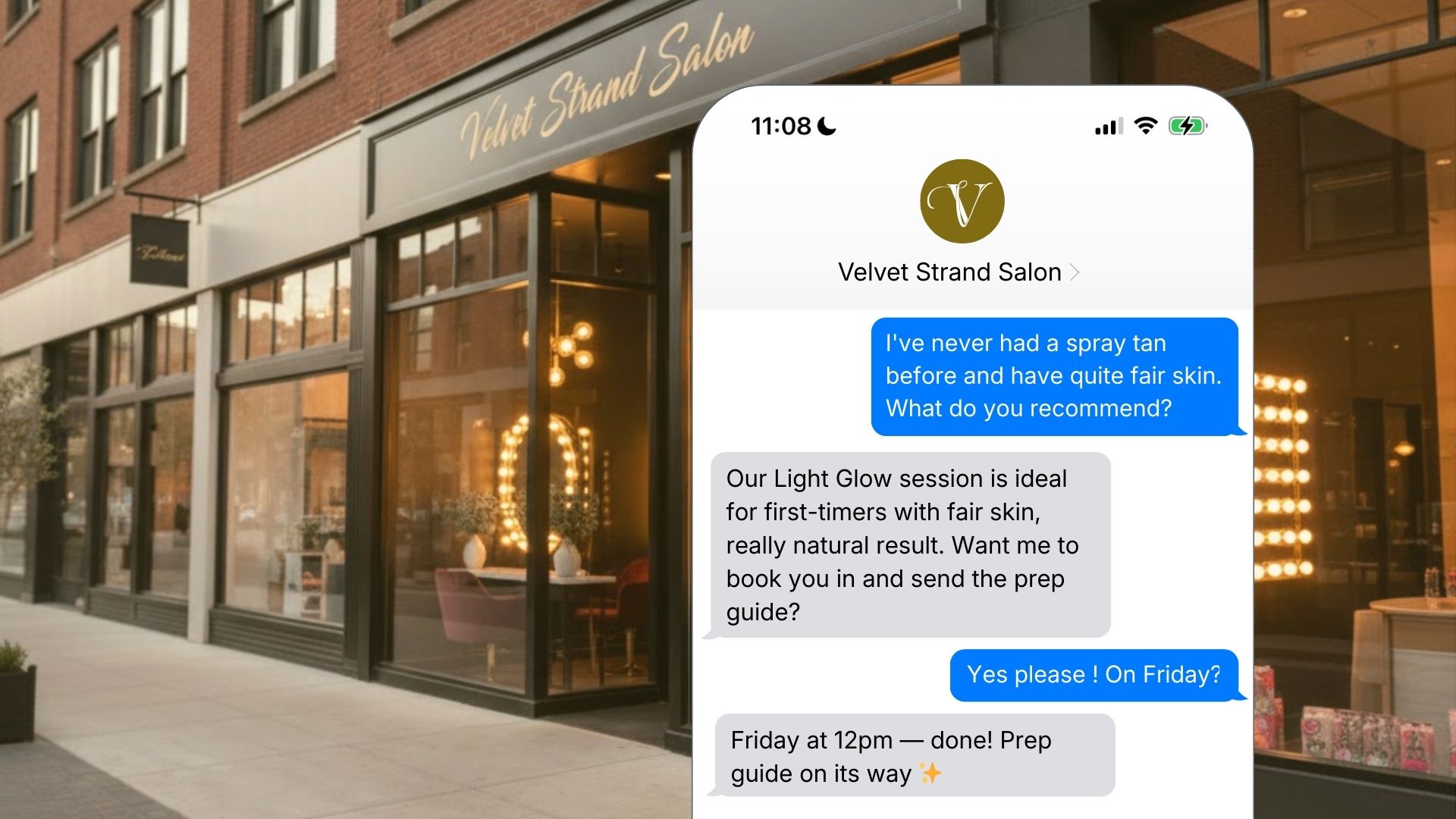
A new client asks what to expect. The agent recommends the right session for her skin tone, books her in, and sends a prep guide, all in one conversation.
And it doesn't have to wait for the customer to ask
This is worth calling out, because it changes the picture a bit.
And the job doesn't end at the confirmed booking. Once someone's booked, Tildei's platform keeps working: proactively sending prep instructions, what to bring, and where to go when they arrive. For a spray tan studio, that's an automated reminder to exfoliate the night before. For an FEC, that's a "here's everything you need to know before Saturday" message landing two days out, saving your front desk from fielding the same five questions on the morning of.
How you communicate between booking and arrival has a big impact on no-shows, day-of experience, and whether a customer comes back. We're covering that in the next post: stay tuned.
How to measure whether it's working
The same rule applies here as everywhere else in the booking lifecycle: measure bookings, not chat activity.
What to track:
- Enquiry-to-booking rate — of the people who asked a question, how many ended up booked?
- Time from first message to confirmed appointment
- Where drop-off happens — if customers are consistently abandoning at service selection, that's a content and conversation problem, not a traffic problem
- Which questions come up most — a high volume of "what's included?" messages is a signal that your service pages need work
The customer who asks is worth more than you think
Someone who asks a question before booking isn't a difficult customer. They're an engaged one. They cared enough to reach out, which usually means they're more likely to show up, more likely to be satisfied with the service, and more likely to come back.
The question isn't a barrier to the booking. It's the beginning of the relationship, if you're there to answer it.
Want to see how Tildei's Discovery Agent works for your business? Book a demo.
Every booking starts with a question.
Retail brands have spent decades perfecting the art of converting browsers into buyers. They've mastered website popups, abandoned cart recovery, and post-purchase engagement. Meanwhile, the salon and spa industry has largely relied on traditional booking methods and basic appointment reminders.
But here's the thing: your salon guests behave exactly like retail shoppers. They browse your services, get distracted, abandon bookings halfway through, and need gentle nudges to return.
So why not borrow the conversion tactics that e-commerce brands use to drive millions in revenue?
Let's explore three powerful retail marketing techniques that salons can adapt to fill appointment books and increase rebooking rates.
1. Instant Booking Popup: Capture High-Intent Visitors
Visit almost any retail website and within seconds, a popup appears offering to collect your email or phone number in exchange for a discount code. It's simple, direct, and incredibly effective at capturing contact information while visitors are actively browsing.
Salons can use the same tactic, but instead of offering a coupon, offer something more valuable: an instant way to book an appointment.
Here's what it looks like: A visitor lands on your website, maybe they're browsing your services page or checking out your team of stylists. Within a few seconds, a clean, simple popup appears. They enter their number and immediately receive a text message:
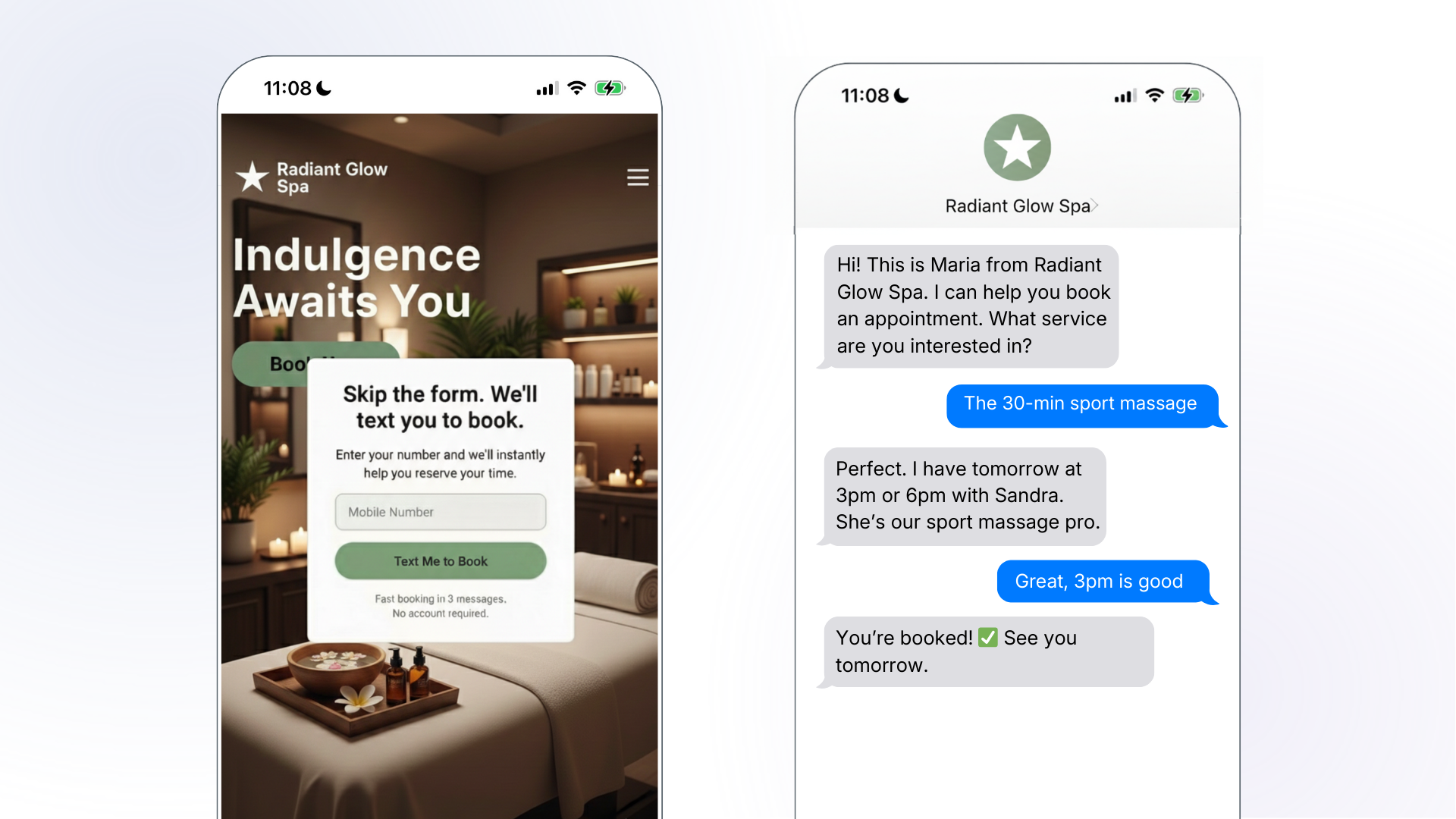
From there, a quick text conversation asks a few qualifying questions: what service, which stylist, preferred day and time. With these details confirmed, it books the appointment directly into your system. The entire process happens via text, which means they can respond immediately or come back to it later when they have their calendar handy.
Why this works:
The visitor came to your website with booking intent. They're already interested. But traditional booking forms require multiple steps, dropdown menus, calendar navigation, and full attention. Many visitors aren't ready to commit to that process right now - but they are willing to share their phone number for a simpler option.
By offering to complete the booking via text, you're meeting them where they are: on their phone, multitasking, possibly browsing during a work break or while watching TV. Text conversations can happen over minutes or hours, fitting into their schedule instead of demanding immediate completion.
The key insight:
Retail popups work because they reduce friction while intent is high. For salons, the biggest friction isn't price - it's the complexity of the booking process itself. A simple popup that offers to handle booking via text removes that friction entirely.
2. Abandoned Booking Recovery: Rescue Half-Completed Appointments
E-commerce brands know that nearly 70% of online shopping carts get abandoned. Their solution? Automated recovery messages that bring shoppers back to complete their purchase.
Salons face the exact same challenge. A potential guest starts filling out your online booking form, selects their service, maybe even chooses a time slot, and then disappears. A phone call interrupts them. They realize they need to check their calendar. They get confused about which service they actually need.
That potential appointment just vanished.
The retail-inspired solution: When someone abandons a booking mid-process, automatically reach out via text with a helpful message like:
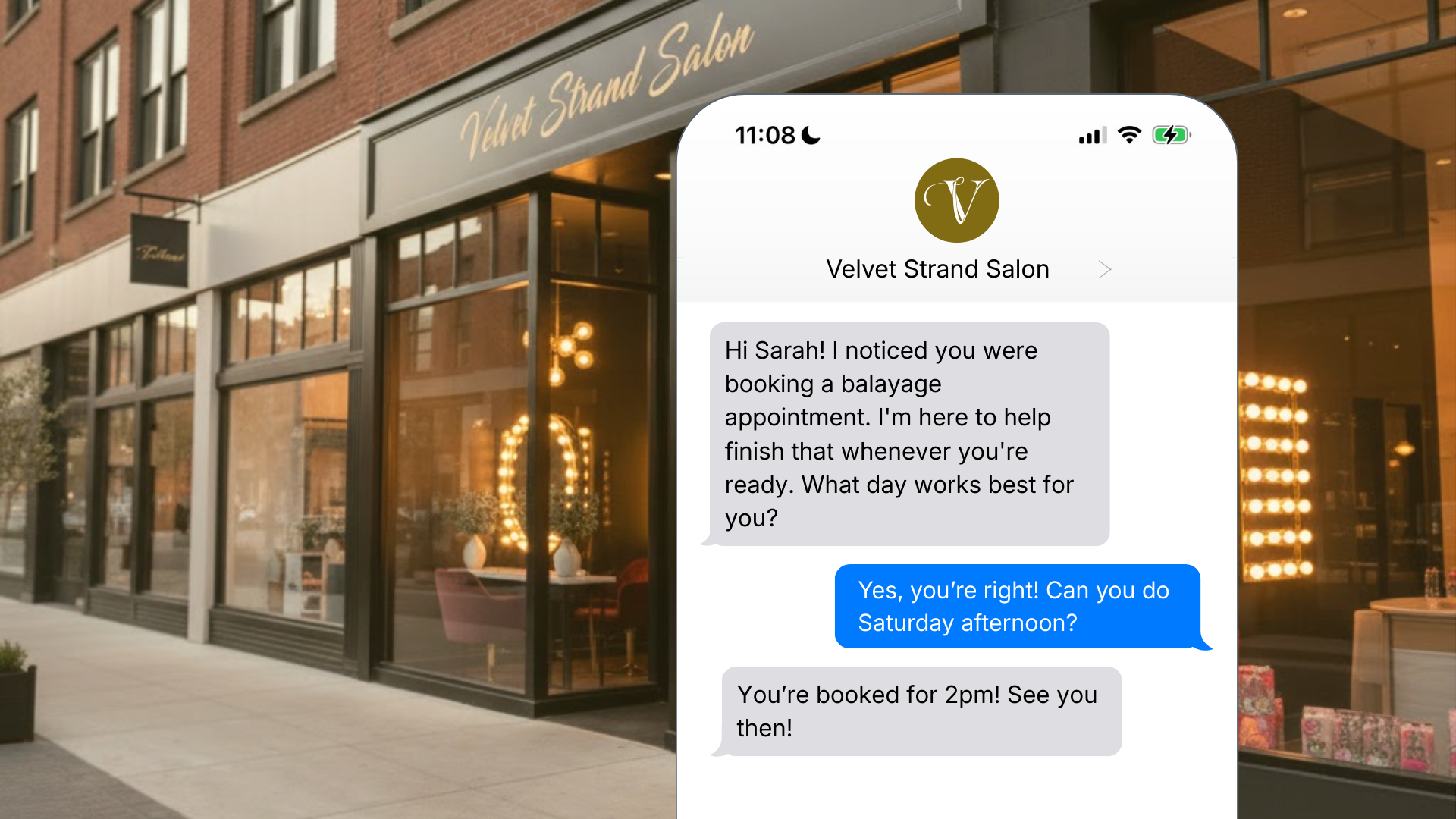
Notice the difference from a simple reminder: you're not just saying "you didn't finish booking." You're offering to complete the booking together via conversation, removing whatever friction stopped them the first time.
Why SMS outperforms email here:
Text messages have a 98% open rate compared to email's 20%, and people respond to texts within minutes rather than hours or days. More importantly, unlike abandoned cart emails that just link back to the same form they already left, a text conversation can adapt. If their preferred time isn't available, the agent can suggest alternatives. If they're unsure which service they need, they can ask qualifying questions. The conversation removes the friction that caused abandonment in the first place.
Exit-intent technology: The most sophisticated version detects when someone is about to leave your booking page entirely. The moment their cursor moves toward the close button, a message appears:
"Wait! Having trouble booking? Enter your number and we'll text you to finish scheduling."
This transforms abandonment from a lost opportunity into a new conversation channel. The guest who was about to leave your website is now in an SMS thread where booking can happen on their timeline.
3. Post-Appointment Engagement: Turn One-Time Guests into Regulars
Retailers have mastered the post-purchase experience. Buy a pair of running shoes, and you'll receive care instructions, styling suggestions, and recommendations for complementary products. They know the moment right after purchase is when customers are most engaged with your brand.
Salons have an even better opportunity here - but most completely miss it.
What most salons do: Have the front desk ask the guest to rebook during checkout. Put the burden on the stylist or service provider. Hope the guest remembers to rebook in 6-8 weeks.
The retail-inspired solution: Create a multi-touch post-appointment journey that keeps guests engaged and makes rebooking effortless.
Immediately after the appointment:

This flips the traditional retail sales model on its head. Instead of pushing products during the appointment (when everyone feels pressured), you're providing genuine value when the guest is home, trying to style their hair, and realizing they need help. You've transformed your stylist from salesperson to trusted advisor.
3-4 weeks later, based on their specific service:
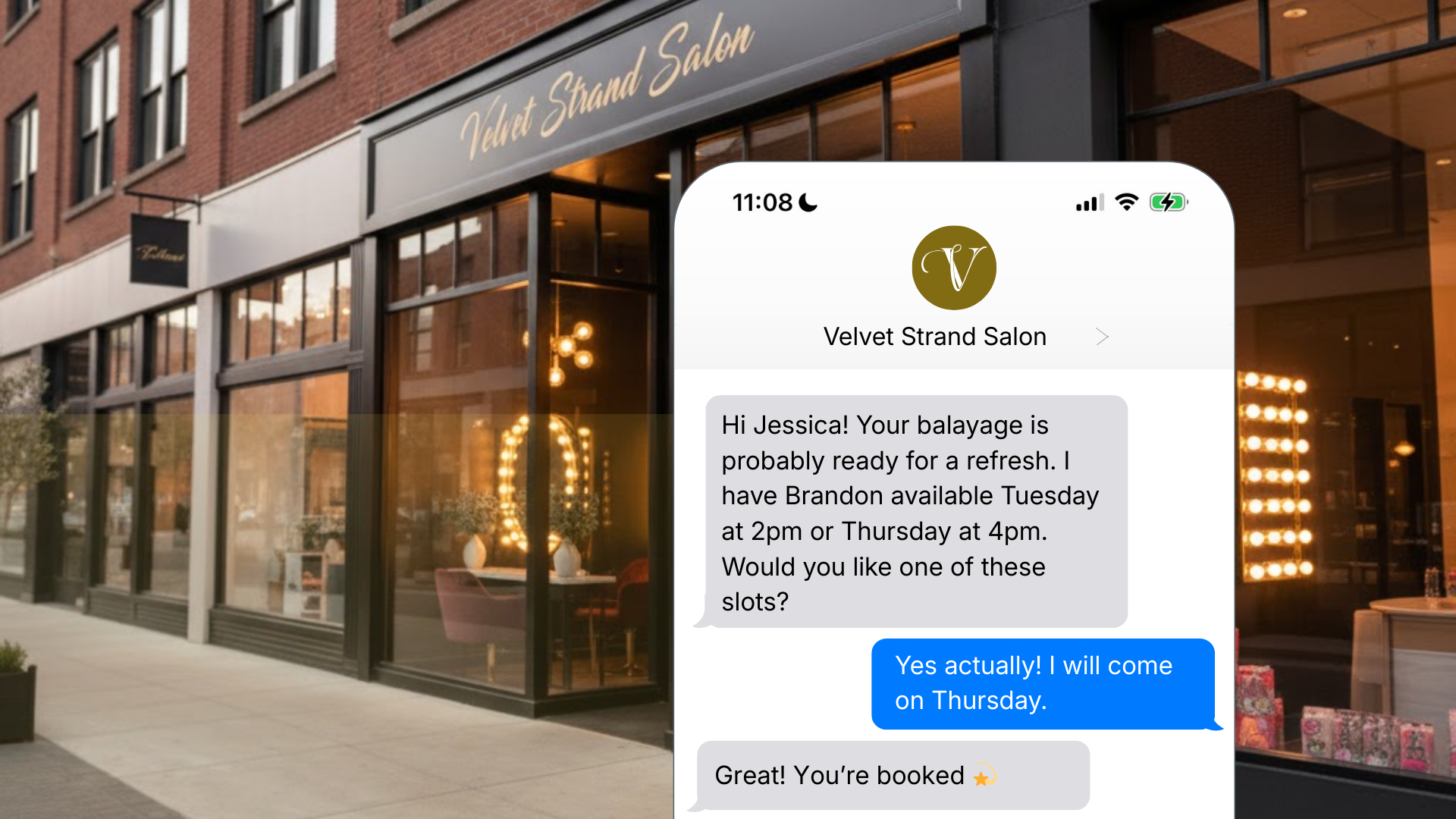
Notice what's different from a typical rebooking reminder: you're not saying "it's been 90 days, time to book." You're reaching out at the optimal moment based on the actual service they received. And instead of making them research availability, you're offering pre-selected times with their preferred stylist.
Rebooking becomes a one-text decision: "Yes, Tuesday at 2pm works" instead of a multi-step research project.
Why personalized product recommendations work:
Retail brands don't blast random product emails - they recommend items based on your purchase history and browsing behavior. Apply the same logic to salon retail: when you text guests the specific products their stylist used, you're not selling, you're helping them maintain the investment they just made in their appearance.
Why This Matters Now
These retail marketing techniques work because they acknowledge a fundamental truth: people are busy, distracted, and overwhelmed with choices. The businesses that win are those that reduce friction and make the next step obvious and easy.
Traditional salon marketing treats booking like a transaction: call us, fill out our form, show up on time.
Retail-inspired marketing treats booking like a conversation: let us help you find the right service, book at your convenience, and make it easy to come back.
The technology to do this finally exists. AI-powered agents can handle these text conversations at scale, understand intent, ask qualifying questions, and complete bookings without requiring your staff to manually respond to every message.
The question isn't whether these techniques work: retailers have proven they do, to the tune of billions in recovered revenue. The question is: which salons will adapt them first?
Want to see how these techniques could work for your salon? Book a demo!

This is the second part of our series on the future of marketing automation with AI agents. In Part 1, we focused on the back office: how autonomous agents take on the operational work that keeps campaigns moving.
In Part 2, we’re moving to the front line: where customers are actually talking to you.
Because if operations is where marketing work happens, engagement is where marketing value is created.
Marketing teams are drowning in conversations
Customer engagement in 2025 doesn’t look like a simple funnel. It’s a messy web of:
- DMs on Instagram, TikTok, and Facebook
- Comments on organic posts and ads
- Emails, SMS replies, and chat widgets
- Conversations you are not even a direct part of, such as reviews, Reddit posts, etc
All from customers who expect answers in minutes, at any hour.
Marketers are already juggling 12–20 tools in a typical stack, and fragmented systems make it hard to deliver a consistent experience. The result is familiar: social teams working late “just catching up on DMs,” growth teams copying emails and phone numbers into CRMs, high-intent comments going unanswered, and chatbots that technically “reply” but can’t flex to your brand voice, your offers, or your stack.
The gap between the experiences you’d like to deliver and the ones you actually can isn’t a creativity problem. It’s the reality that most “automation” stops at sending a message or firing an alert, instead of driving the whole outcome.
From chatbots to autonomous engagement agents
Most marketers have already experimented with conversational tools: a FAQ bot on the website, a basic DM responder, a form-based flow for lead capture. They help at the margins, but they don’t really understand your goals, respect your commercial guardrails, use your real data, or update your downstream systems.
Autonomous engagement agents are different.
A Tildei AI agent behaves like a software teammate. It perceives what’s happening across channels, reasons using your goals, rules, knowledge and brand voice, and then acts to move a conversation toward an outcome: reply sent, email captured, appointment booked, purchase completed.
You give it a clear objective (“book qualified appointments from DMs”, “capture email + SMS from high-intent visitors”) and a few guardrails. The agent listens, responds, updates profiles and pushes the workflow to completion, not just the first reply.
Engagement use cases: from trigger to outcome
Just like in operations, Tildei’s engagement agents follow the same backbone:
Trigger → Agentic resources → Outcome
Below, we cover how it plays out in external, customer-facing journeys.
1. Conversation Management – always-on, on-brand replies
.png)
Take a real example from Big SNOW, the indoor ski resort we work with (you can dive deeper in their case study). Their inbox was full of questions like:
“Which ticket do I need for Park After Dark tonight? Is it included in my Snow Day ticket?”
With Tildei’s Conversation Management agent in place, that now looks like:
- A guest sends a DM on Instagram or Messenger
- The agent pulls from Big SNOW’s knowledge graph (tickets, events like Park After Dark, policies) plus their brand voice and guardrails
- It then replies instantly, on-brand: “Great question! Park After Dark isn’t included in a standard Snow Day ticket, but you can add it on for tonight’s session. Want me to send you the link to the right pass?”
The experience feels like a human conversation with someone who knows the product inside-out, but it’s handled end-to-end by the agent.
2. Appointment Booking – from DM to calendar, no handoffs
.png)
A different conversation:
“Can I talk to someone about getting a fitting / demo / consultation?”
Usually, this triggers a messy back-and-forth about time zones, availability and links. Somewhere between “Does Tuesday work?” and “Here’s my calendar,” you lose the lead.
In the Appointment Booking use case, your engagement agent:
- Detects that the intent is to book time.
- Checks your rules and systems (who can take the meeting, which calendar to use, which slots to expose).
- Offers a small set of options that fit your constraints.
- Confirms the booking, sends a confirmation message and writes everything back to your tools.
No one on the team has to touch the process, but the customer experiences a smooth, human-like interaction.
3. Email/SMS Capture – turning conversations into subscriptions
.png)
You’re running a seasonal promotion. A prospect DMs: “I’m looking for a backpack. Any good deals?”
Your engagement agent doesn’t just answer the question; it uses the moment to grow your list:
- It responds with the current offer and a relevant product suggestion.
- It checks your success criteria (“grow email and SMS subscribers from high-intent conversations”).
- It follows up: “We’re also giving an extra 10% off your first purchase if you join our newsletter. Want me to send you a code?”
- When the customer says yes and shares their email/phone, the agent:
- Validates the details and confirms consent
- Updates the CRM and marketing platforms
- Adds them to the right welcome / promo journey
- Confirms back in the DM with the discount code
- Validates the details and confirms consent
What used to be a one-off DM about a discount becomes a clean, consented subscriber, with zero manual copying, tagging, or list maintenance from your team.
4. Shopping Concierge – a product expert in every DM
.png)
Now imagine a higher-consideration purchase:
“I have questions about these two watch models. Why is one more expensive?”
Your engagement agent acts like a knowledgeable store associate:
- Pulls product knowledge (features, specs, pricing)
- Answers follow-up questions clearly and confidently
- Handles logistics (“Do you ship to Spain?” → checks policies and responds)
- Switches language when needed
- Nudges the customer toward checkout when they’re ready
This isn’t a “chatbot script”. It’s a guided conversation aiming at a real commercial outcome.
5. Social Conversation Responses & Analysis – comments that turn into campaigns
.png)
Your brand posts a new product photo on Instagram. Among the comments:
“Love the launch and the old-school flavours. I’d love to try this on my channel. Where are you sold?”
Here’s what your engagement agent does:
- Replies in the comments with where to buy
- Analyses the commenter’s profile (reach, relevance, past interactions)
- Flags them as a potential influencer
- Sends a follow-up DM offering a sample pack
- Logs the opportunity and reports on how many similar profiles it found this week
What used to be “just community management” becomes systematic opportunity capture.
Why Tildei for engagement?
So why layer agents like this on top of your existing channels instead of adding yet another chatbot or point solution?
1. One agentic backbone across ops and engagement
Your customer doesn’t care which team “owns” the interaction. With Tildei, the same agentic layer that powers social listening, profile enrichment and reporting on the operations side is also handling inbox replies, appointment booking, email/SMS capture and comment-to-DM flows.
You get one coherent system that connects signals, decisions and actions across both internal operations and external engagement, which is how you truly build powerful marketing agents and activate them everywhere, not just in one channel at a time.
2. Brand-safe, outcome-driven conversations
Tildei agents are wired into your brand voice, your guardrails and your definitions of success. They know what “good” looks like, whether that’s a booked call, a qualified lead, a completed order or a published review, and they steer conversations in that direction without going off-script or off-brand.
Every interaction is judged on business impact, not just “responses sent”.
3. Fast path to visible impact
You don’t need a massive replatforming to get started. Most teams begin with one or two high-impact use cases, for instance, handling the majority of Instagram DMs, booking qualified appointments directly from social, or capturing emails from high-intent conversations.
From there, you can expand as you see results, mirroring the same Day 1 / Day 30 / Day 60 journey you followed on the operations side.
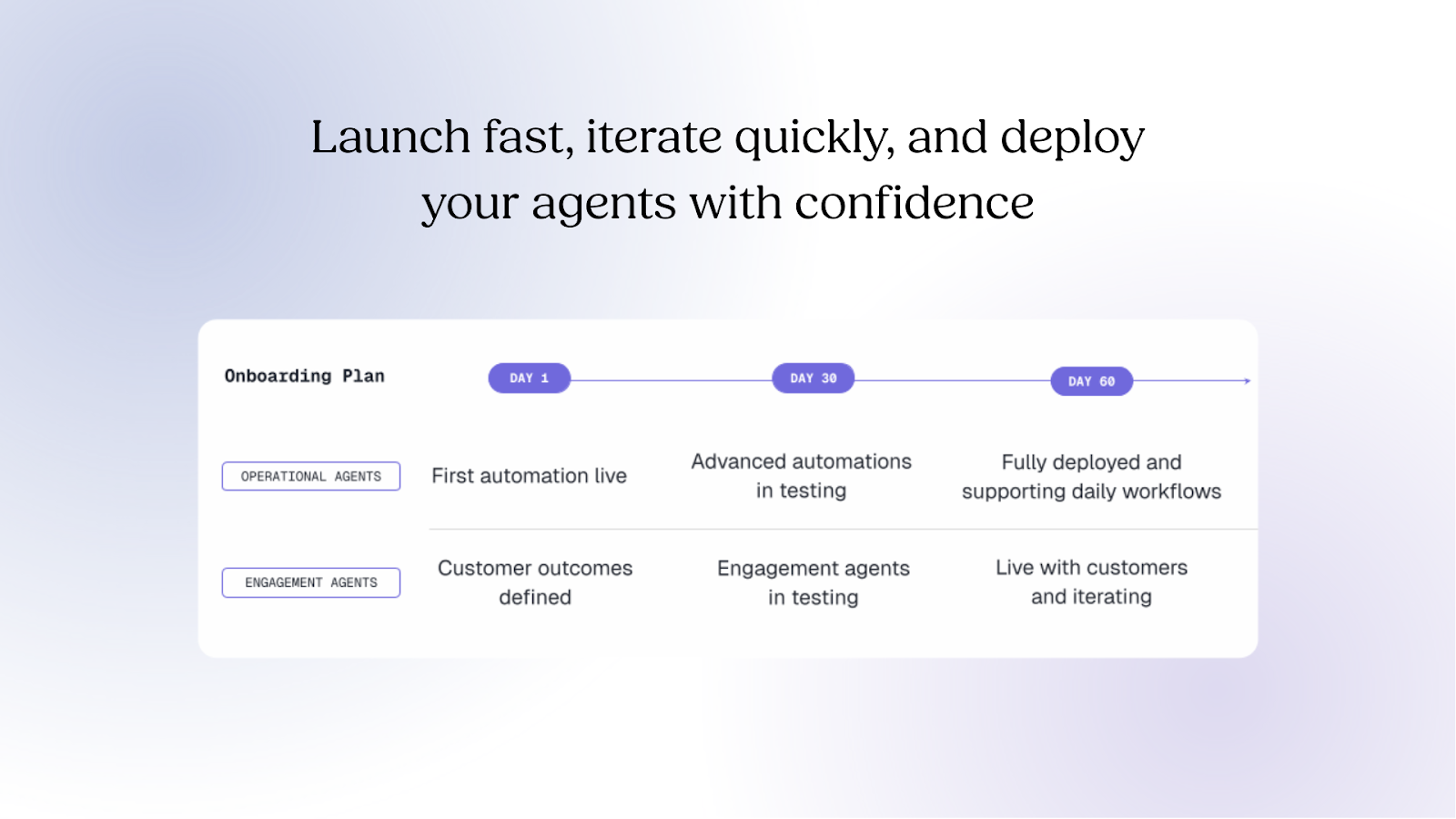
Build powerful marketing agents. Activate them everywhere.
Marketing automation started as scheduling emails and deploying basic chatbots.
Now, you can delegate entire conversations, from first DM to booked appointment, from comment to conversion, to AI agents that think and act like seasoned members of your team.
In Part 1, we showed how those agents take on the operational busywork.
In this Part 2, you’ve seen how they show up on the front line as 24/7 brand ambassadors across DMs, comments and conversations.
That’s the future we’re building at Tildei: Build powerful marketing agents. Activate them everywhere.
If you’re ready for your customer engagement to move from reactive to autonomous, without ripping out your stack, let’s talk about what your first engagement agent could do. Book a demo here.
Engagement, Marketing
How Tildei’s AI agents transform customer conversations
This is the first part of a two-part series on how Tildei’s AI agents transform marketing. We’re starting behind the scenes, with the workflows and operations that keep campaigns moving.
Most marketing teams aren’t held back by a lack of ideas. They are held back by the work required to execute them.
Marketing teams are drowning in busywork
In 2025, this is the marketing reality: marketers are juggling 12–20 tools in a typical stack, yet most teams still struggle to integrate data across systems. Many spend hours every week checking data quality, reconciling spreadsheets, and chasing updates. Despite the AI hype, only a small minority actually use AI to automate workflows end-to-end, the kind of automation that really changes the workload.
At the same time, complexity keeps rising:
- Dozens of channels to monitor
- Siloed partners and platforms
- Intake requests via email, Slack, forms, and meetings
- Leadership asking in every QBR: “So… how are we leveraging AI to be more efficient?”
The gap between what marketers could do and what actually gets done is a workflow problem, not a creativity problem.
A very 2025 marketing operations day (and why it needs to change)
Picture a typical day in your team:
- Your lifecycle marketer is exporting last week’s email performance into a CSV, pulling in Google Analytics, and highlighting trends so the content team can “quickly” see what’s working.
- Support closes a ticket where a customer mentions it’s their anniversary next Thursday: that nugget of context dies in the help desk instead of flowing into marketing.
- Meanwhile, a detailed Reddit post about your product, full of praise, concerns, and language you wish you’d thought of, slides by unnoticed because no one has time for social listening today.
Each of these moments could have sparked a smarter campaign, tighter messaging, or a better customer experience. Instead, they become missed opportunities because teams are buried in manual coordination.
Now imagine the same day with an AI marketing agent quietly running in the background:
- The second that Reddit post appears, your AI agent runs sentiment analysis, extracts key concerns, maps them to your goals, and drops a short briefing into your #marketing channel:
“Customer anxiety around packaging; consider unboxing content to clarify expectations.” - When the anniversary-related support ticket closes, the agent parses the message, captures “anniversary next Thursday,” and updates the customer’s profile in Braze, Attentive, Salesforce Marketing Cloud, wherever you market. It then queues them for a timely, personalized offer.
- Weekly performance reports? The agent compiles, formats, and sends them every Monday morning without anyone exporting a single CSV.
Same tools, same data, but now the orchestration isn’t sitting on your team’s shoulders.
That’s the shift from manual marketing operations to autonomous marketing operations.
What autonomous marketing agents actually are (and aren’t)
An autonomous marketing agent is not just another chatbot. It’s not a set of rigid rules that break every time something unexpected happens.
A Tildei AI agent is a software teammate that can:
- Perceive what’s happening across your channels, systems, and data streams
- Reason using your goals, rules, and brand knowledge
- Act to move a workflow forward, without a human nudging every step
Give it a goal and some guardrails, and it breaks the work into subtasks: monitor signals, analyze, update profiles, trigger campaigns, generate reports. It keeps going until the objective is reached, or until a human chooses to step in.
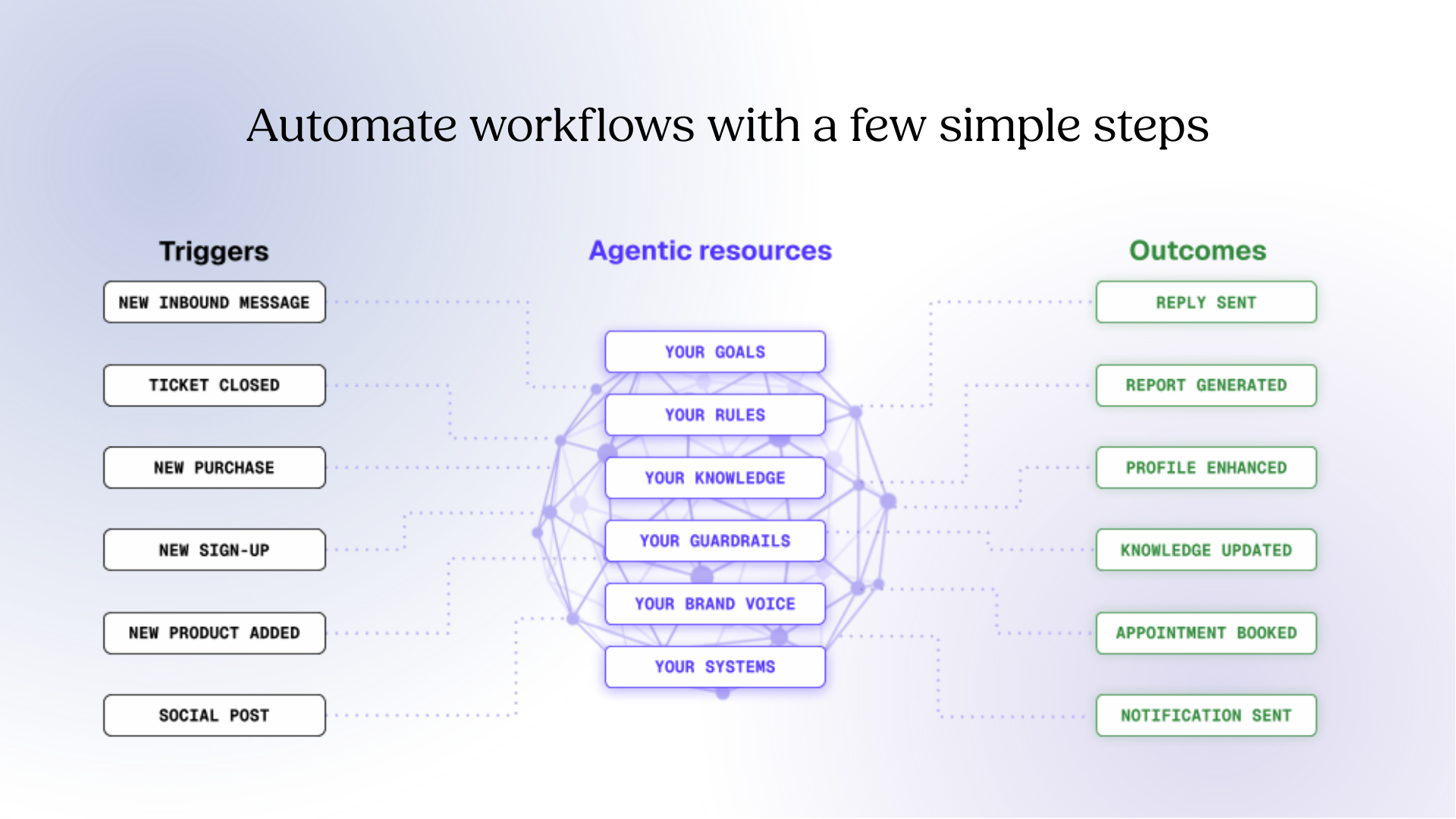
In this series, we’ll look at these agents both as always-on marketing-ops teammates and as brand ambassadors in customer-facing journeys. In Part 1, we’re focused on the former: how they support internal marketing operations day in, day out.
From triggers to outcomes: the core marketing operations use cases
1. Customer Sentiment Analysis – from social signal to action
A social post appears, say, a detailed Reddit thread. A traditional tool might flag it or send an email alert, then it waits.
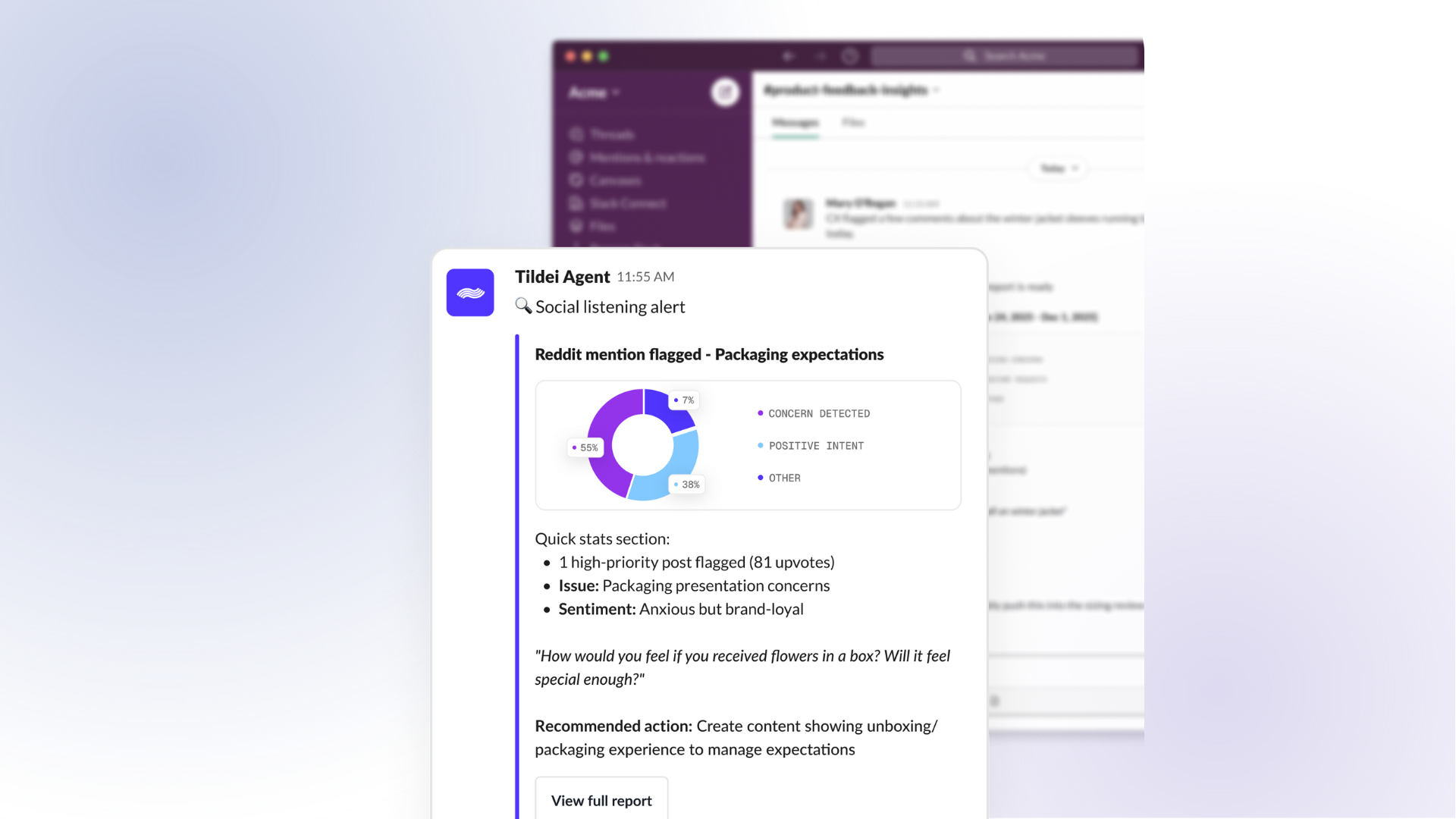
A Tildei Operational Agent:
- Detects the new post
- Analyzes sentiment and extracts key themes (e.g. concerns about packaging)
- Cross-checks your rules (e.g. “flag packaging issues,” “prioritize high-value or high-reach users”)
- Generates a concise insight report
- Pushes it into the right internal channel (Slack, email, task tool)
- Optionally creates a ticket or adds it directly to your campaign backlog
No one had to be “on Reddit duty”. The signal is captured, interpreted, and turned into next steps, end to end.
2. Post-Support Progressive Profiling – connecting CX to marketing

Support closes a ticket:
“Can my order get to Columbus by Thursday? It’s my anniversary and I don’t want it to be late.”
Traditionally, that context lives and dies in the help desk. If you’re lucky, someone adds a note to the CRM.
With Tildei, the agent:
- Reads the closing conversation
- Extracts the relevant details (anniversary, date, location)
- Writes them into the customer’s profile across your marketing platforms
- Can automatically queue them for a future anniversary-related campaign or a one-off surprise
You’ve just converted a one-off service interaction into durable, usable marketing intelligence.
3. Social Listening & Opportunity Identification – turning noise into ideas
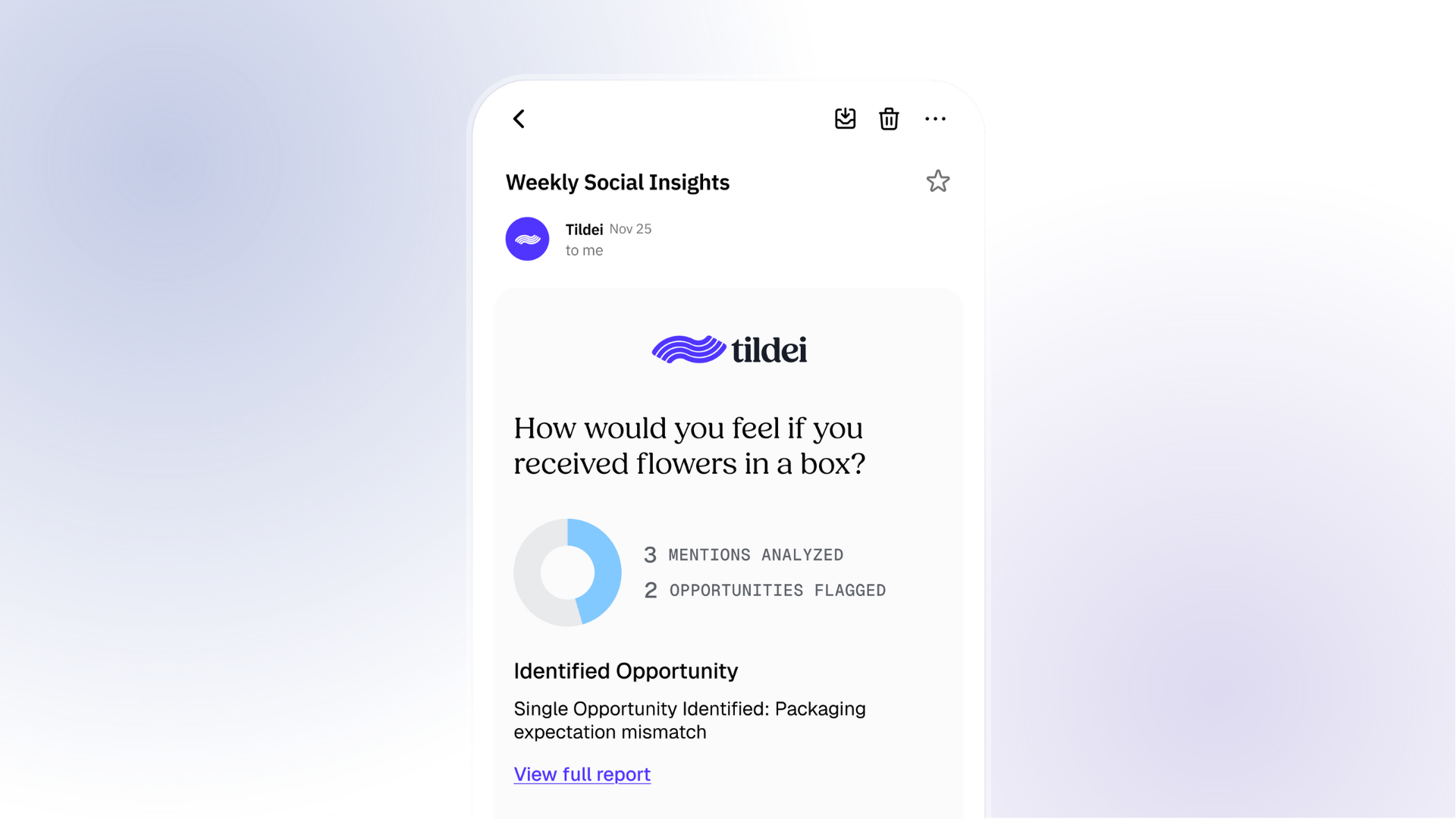
Think of posts like:
“How would you feel if you received flowers in a box?”
A Tildei AI agent doesn’t just classify this as “neutral” or “question”. It:
- Reads the full conversation
- Identifies the underlying anxiety (“will this feel special enough?”)
- Writes a mini-report under “Identified opportunities” (e.g. Expectation gap → show unboxing and packaging in content)
- Routes this directly to the brand or content owner
Instead of someone trawling forums for hours, your agent continuously scans, summarizes, and surfaces specific ideas your team can act on.
4. Conversation Analysis & Product Feedback – catching moments of delight
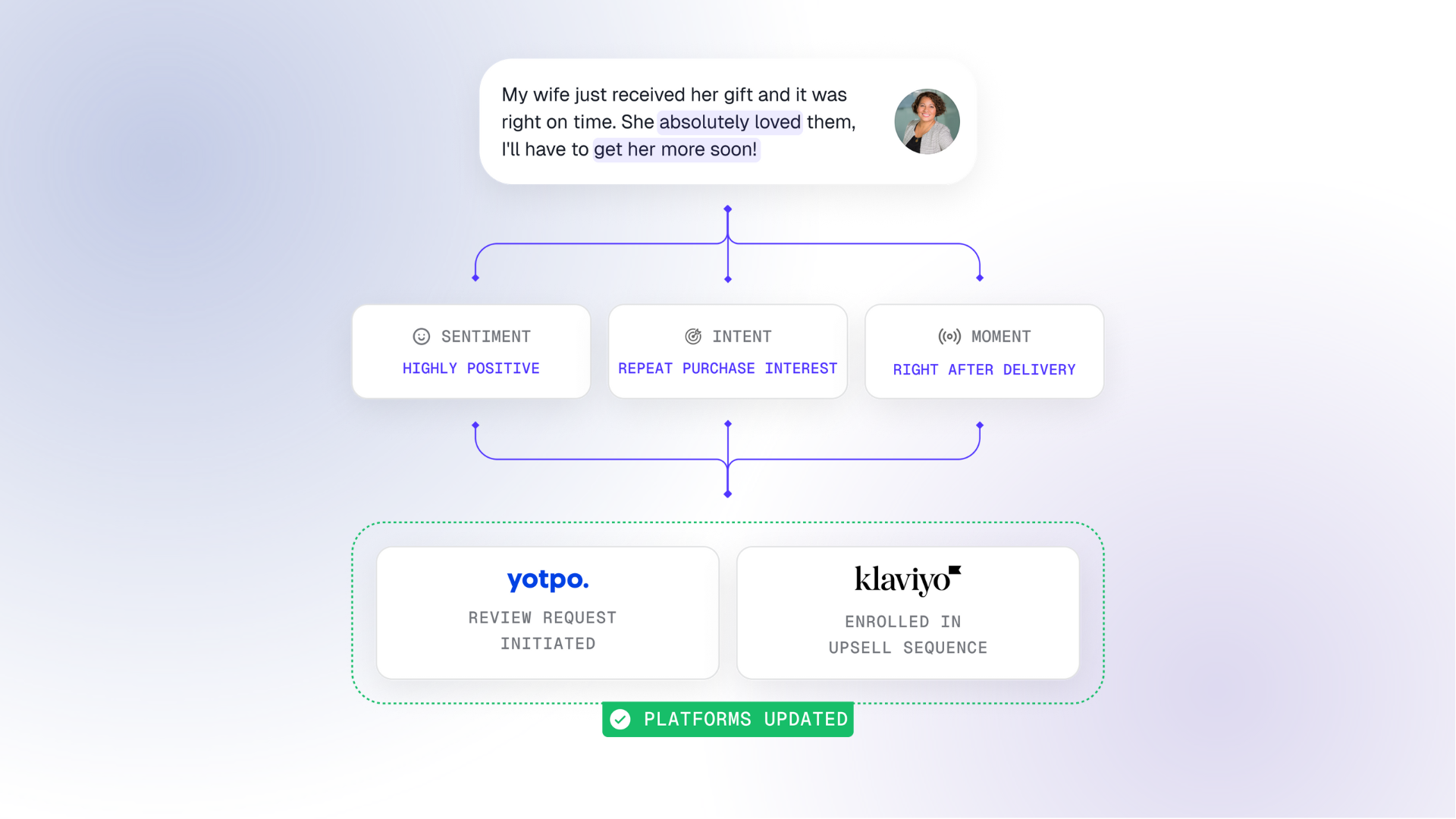
A customer says:
“My wife just received her gift and it was right on time. She absolutely loved them, I’ll have to get her more soon!”
The Tildei AI agent:
- Detects positive sentiment and purchase intent
- Reconciles that with the customer’s history
- Triggers a review request or an upsell journey at exactly the right moment, via the channel that works best for that person
Your team doesn’t need to read every transcript, the agent spots the moment and acts.
Across all these, it’s the same backbone: from trigger → reasoning → outcome.
Why Tildei?
So why choose Tildei instead of just adding another tool to an already crowded stack?
Because Tildei isn’t “one more tool”, it’s the agent layer that sits on top of the tools you already use.
- Cross-stack intelligence
Agents tap into your CRM, help desk, analytics, marketing platforms, and internal documents. No more copy-paste or CSV gymnastics. - True workflow automation
Tildei doesn’t stop at alerts. It carries the work from trigger to completed action: updated profiles, generated reports, launched journeys. Your team reviews, adjusts, and steers, but doesn’t have to push every button.
Fast path to value
You don’t need a year-long AI project.
.png)
You start small, prove value quickly, and scale up what works.
Build powerful marketing agents. Activate them everywhere.
Marketing automation started as “send emails on a schedule”.
We’re now at the point where you can delegate entire workflows to AI agents that think and act like experienced members of your team, across operations and engagement, on top of the stack you already have.
When operations start to run themselves, your team can focus on what really matters: shaping great customer journeys. In Part 2, we’ll flip the lens and show how the same AI agents work on the front line as always-on brand ambassadors.
That’s the future we’re building at Tildei:
Build powerful marketing agents. Activate them everywhere.
If you’re ready for your marketing operations to move from manual to autonomous, without ripping out your stack, let’s talk about what your first agent could do. Book a demo here.
How Tildei’s AI agents transform marketing operations